Like the MamaLand Empire!

Have you Liked the AliyahLand adventure?
      ...and sign up for weekly aliyah tips by email (it's free).

Showing posts with label Arabs. Show all posts

Do American Jews get a vote in Israel?

If you hate politics, I get it.  Please move along.  Just skip this post.

When I started this site, I feel like I made a promise to you and to myself that I wouldn't get political.  If you want to know more of my thoughts on getting political, in a book that weirdly doesn't get very political, I urge you to read my book, Getting Political: Scenes from a Life in Israel.  (Hey, even if you don't want to know my thoughts, pick up the book anyway!  Seriously, it doesn't get very political...)

And yet.

And yet.

There are times when I feel like I have to get political.

Because when you move to Israel, you cease, in some important way, to be a "diaspora Jew" and become an “Israeli Jew.”

You live here, you walk the daled amos basically every single day of your life, you breathe the holy and sometimes stinky air.

You live with the noise, or block it out with a nonstop stream of English podcasts and audiobooks.

You vote in the elections.

And I don't even have a post I can link to about the elections, because I haven't talked about politics.

But just for a minute, I want to.  So please cut me some slack.
Because I came across this article about how the Canadian diaspora, and presumably, the rest of the diaspora, can influence Israel.

And it scared me.

Spoiler alert: the way that diaspora Jews can influence Israel, apparently, is to participate in the World Zionist Congress coming up in October.  In fairness, it's held in Jerusalem, so they

Why is Israel so noisy???

The noise in Israel drives me crazy sometimes.  There, I said it.  And I feel better for saying it.  And yes, it is specifically the noise in Israel.  Because Israel truly is an especially noisy place.

I used to just think we lived in a particularly noisy neighbourhood.  Luck of the draw, I figured.  Then I travelled around and realized that I do indeed live in a particularly noisy neighbourhood – and that neighbourhood is called the State of Israel.

You simply can’t get away from noise here.  So don’t even try.

Take our house, for example.  We live within walking distance of four schools, all of which, instead of school bells, play tunes and chimes (instead of school bells, like we had in Canada) so loud you can hear them blocks away.  GZ’s school routinely plays music for the kids’ enjoyment in the yard as they arrive in the morning, and you can hear that two blocks away as well. 

Then there are the happy routines of parades, celebrations, simchas, and special occasions, each of which

What every parent must know about youth groups in Israel (with handy vocabulary list!)

If you grew up outside of Israel, you may think you know what a youth group is--but you probably don't, at least not until you've experienced the Israeli variety.

And if you’re too old to experience it yourself, maybe it’s something you can look forward to for your kids.

(For those of us too old to be part of a youth group ourselves, I’ve put together a list of vocabulary below that you might find helpful – if anything’s missing there, let me know and I’ll add it in!)

I personally was a Brownie and then a Girl  Guide, which is the Canadian version of Girl Scouts, with all the same ideas, mainly that it’s kind of military group of kids who are corralled and brought places and taught principles of healthy living and woodsmanship by adults.  Hmm… now that I put it like that, it really doesn’t sound much fun at all.

This is literally what we had to wear to do these activities:

(except I didn’t have nearly so many badges!)

Our weekly meetings were held at a set day and time, following an agenda set by our adult leaders, who in Guides were known as Tawny Owl and Snowy Owl, for whatever reason – again, the woodsy theme, even though we were all actually sitting in my junior high school cafeteria.

During the summer, I went to Girl Guide camp, which was basically like one long Girl Guide meeting, with an emphasis on woodsmanship and a little more singing.  Oh, and we got to wear the “camp uniform,” which was slightly more casual.

So what do kids do in Israel?  And how is it different from what I grew up with?

Here, there have what are called תנועות נוער / tenuot noar, which literally means meaning youth

My vacation in Mecca, or why I’m saying bye bye to Airbnb

image

I’ve always loved Airbnb, a site that made it super-easy for anyone and everyone to rent out their place and make a little money on the side (or a lot – I know for lots of people it’s an actual business at this point). 

But I abruptly quite loving them today, following the announcement that they’ll be blocking listings from Jews in disputed areas of the West Bank.

Why?  According to NGO Human Rights Watch, who undoubtedly has advised Airbnb every step of the way, it’s mainly because “Palestinian ID holders are effectively barred from entering” these areas (just as they can’t enter many parts of Israel).  Because the Palestinian Authority have utterly failed, since the initial hope of Oslo, to reach any kind of peace agreement – not tried and failed, but simply failed due to power hunger on the part of their leadership.

When I read about all of this this morning, frankly, I was astonished that I had an opinion at all.

I didn’t used to.

You have to understand that I was a very bad prospective olah, in that I didn't really know anything about Israel before we came here.

I probably couldn't have found Haifa on a map.  Let alone Beer Sheva, Netanya, Ramat Gan and a whole bunch of other towns that I now know as well as the suburbs where I grew up.

Which also meant I couldn't tell the difference, politically, between Chevron and Rechovot, between Efrat and Eilat, between Kochav Yaakov and Kochav Yair (okay, to be fair, even born Israelis get those two mixed up!).

I always figured that if I lived in Israel, the "situation" here would make a lot more sense.  I would know what "settlements" people were talking about and understand whether they were right or wrong and which were the good bits of the country and which weren't.

I’m a lot less naive now. 

But even so, I certainly couldn't claim to know more about how to fix the situation than anyone else.  So the fact that Airbnb, like the EU, is announcing that they have the answer, and that the answer is to label different parts of the country in different ways to call attention to the political situation… well, that’s astonishing. 

  • It’s astonishing that they

Canadian doctor Tarek Loubani shot near Gaza: A Canadian in Israel responds

image

You know what this blog post was going to be about?  Volunteers.  And about how Israel doesn't appreciate volunteers who come here from places like United States and Canada. 

It’s an important topic, right?  Too bad that’s not what I ended up writing about.

Volunteers are people of all faiths and all ages who don't have to come here, and who work for organizations like Sar-El (which places volunteers on military bases), on farms, in schools, all over the country.  They must contribute millions of dollars to the Israeli economy, which is absolutely fabulous.

I was talking someone a couple of weeks ago who had been here volunteering on farms for two months, and she started telling me about how she and the others were forced to work half a day on Yom HaAtzmaut, while the farm's owner slept in, then lounged around the house with friends and family (later, the volunteers were invited to join the BBQ -- once they were done work).  She noted that the paid migrant workers weren't in the fields... probably because it's illegal to make them work on a national holiday.

Volunteers can work whenever they want, I guess.

That made me mad, and I also, somewhat guiltily, realized that my daughter has had a volunteer from the U.S. teaching English in her school this entire year and I hadn't even met her, let alone thanked her (she's been working one-on-one with some of the native English speakers), until someone invited her to our Lag Ba'omer BBQ.  So I felt bad that she's been in the country so long and probably barely acknowledged by the community, and finally, belatedly, invited her over.

Like I said, that's what this blog post was going to be about. 

Because seriously, with the feeling towards Israel in North America these days, it's not at all obvious that someone would come here to volunteer, paying their own airfare and often also paying to volunteer, just so they can show up and be ignored at best and their goodwill abused at worst.  Israelis probably see volunteers as "freyers," suckers who are easily conned and therefore aren't worth very much.

File:Flickr - Israel Defense Forces - Sar-El Volunteers at Lebanon Border (4).jpgFile:Austrian Volunteers in Ein Hashofet July 19731.JPGimageimage

(All freyers????  L-R: Sar-El volunteers 2012 photo © IDF via Wikimedia; Austrian Kibbutz volunteers 1978 photo © Robert Schediwy via Wikimedia; American volunteers at Masada meeting George W. Bush 2008 © White House via U.S. National Archives; Farm volunteer © WWOOF Israel)

I wanted to write about that because I was mad.  But then…

Then I saw something that made me even madder, and also -- I found out about people who abuse their volunteers even more than Israel does:  Gaza.  Or rather, Hamas, its quasi-elected dictatorship.

Gaza has had a humanitarian crisis over the last few years due to its leadership's terrorist policies.  Hamas is a government that's in power on a one-plank platform: eliminate Israel.  Once elected in 2006, they dismantled electoral operations so nobody could un-elect them and proceeded to take money out of children's and families' pockets and dedicate it to building terror tunnels and rockets with which to bombard nearby Israelis.

Hamas may be many things, but they're not stupid.  So in addition to these operations, they have poured a ton of work into the PR battle for the hearts and minds of the world.  It's a humanitarian crisis, they weep to the world, which is absolutely, 100% true.  And then, they point to Israel.  That's the whole PR thing: point to the crisis, point to Israel.  Repeat until hearts bleed and journalists cry.  It doesn't take much to make journalists cry, especially if there are pictures of children.

But courting NGOs and liberal media outlets is easy, hardly a challenge anymore.  Like I said, they cry easily.

So if I was in charge of the Hamas PR machine, then the thing that I would want most of all, more than anything else in the world, is a Canadian. 

The world loves nobody more than a Canadian.

To the world, Canadians are innocent, naive, the ultimate freyers, really.

Yup, that’s what would head up my wish list: A nice Canadian frayer, a volunteer who could

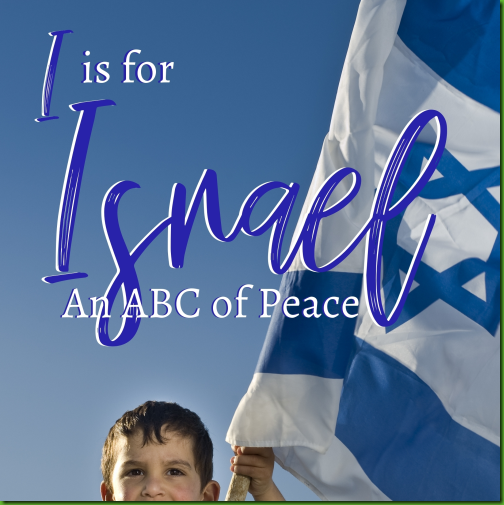
New Book Trailer: I is for Israel - An ABC of Peace

image

I wrote a new book about Israel!  It’s a little different from some of what I’ve written before – it’s a rhyming book about peace and coexistence called I is for Israel, which I wrote in response to a book that just came to my attention recently called P is for Palestine.  Rest assured – my book is better. :-)

I invite you to watch (and maybe even like!) this trailer:

I kind of vowed that this trailer would be one of the first things I’d get around to doing once the wedding was over and done with.  To find out more about the amazing process of creating this book, please see this post on my other blog.

Or – just check out the book itself!


Tzivia / צִיבְיָה


Unseens: How NOT TO learn English in Israel

image

If you're a native English speaker, you've probably never heard of unseens.  I sure hadn't.  But if you are coming here with school-aged kids, you’d better find out quickly, because sooner or later, you’re going to have unseens in your life, too.

The first year I was volunteering to teach English in our local public library, my first kid sat across from me and said we needed to practice unseens.

Now, at this point, I barely understood Hebrew, so I had absolutely no idea what word he was saying.

"What?" I asked.
"Ansinz."  Like it was obvious.
"What?" Me again, in full idiot mode with this fifteen-year-old boy.
"Ensigns."  Now that sounded like an English word... but nothing at all that I could connect with learning the language.

I seem to recall that he had a book with him and at some point, he decided it was easier just to SHOW me what he meant by pulling out the book.

image

(See?  Unseens! What’s so hard to understand about that???)

Thus, I was introduced to the word of unseens, otherwise known as, "the way most Israelis learn English."
Otherwise known as, "the reason most Israelis don't speak or understand English."

It's true: I believe that unseens MAY be the single biggest obstacle between Israeli schoolchildren, who generally spend ten years learning English, and the mastery of the English language.  The only reason I say MAY is because the biggest might be English teachers who are afraid to speak English because they don’t know it well enough.

I mention this here – I actually wasn’t sure which blog to post this to because my other blog, Adventures in Mamaland has far more education-related posts – because a lot of English speaking olim wonder how it is that kids here spend ten years ostensibly learning English, and in many parts of the country, STILL come away knowing virtually nothing and unable to carry on even a basic conversation in English.

The Israeli Ministry of Education has recently called for something like 6,000 new English teachers.  Some friends of mine, native English speakers, are actually doing a free upgrading program this year that lets olim turn almost any Bachelor’s degree into a teaching certificate.  The Ministry is emphasizing fluency in spoken English as a goal for grads, which is fantastic.

In the meantime, what they have is unseens.

So what are unseens?

In the early grades, kids learn English the way

What is Yom Yerushalayim, and why do we need it?

image

What are you up to this week???  Here in Israel, we’re still celebrating.  It’s like one non-stop party at this time of year, which was so bland back when we lived in Canada.  And this time, it’s one of the strangest holidays of all: Yom Yerushalayim (Jerusalem Day). 

This is it – the Big 5-0, and the city is all geared up with so many different kinds of celebration.  Every school in the country, pretty much, is organizing tiyulim to the Holy City, and the place is mobbed with the usual tourists plus some.

I was there, with my son’s school.  We had a great time, but it was a heartbreaking time as well, and here is why:  Jerusalem is so far from being perfect it’s not funny.  Jerusalem is so far from being perfect that I could cry.

imageimage

At the seder each year, we sing, לשנה הבאה בירושלים / leshana haba’ah bi’Yerushalayim – “Next Year in Jerusalem.”  We sing this even if we are lucky enough to be in Jerusalem, because the last word is הבנויה / habnuya – Rebuilt. 

The Jerusalem that we have is a miracle.  It is a beautiful, busy, living, crazy balagan of a city and I love it.   I love the fact that the country just turned 69 years old, and its capital is only 50 – this shows that you can’t take even a capital city for granted here, since we had to do without it for 19 years.

Yes, a miracle indeed. 

image

(photo credit: IDF via Wikimedia)

The Jerusalem we have today is truly many things… but it is not yet rebuilt.

This year, we’re celebrating 50 years since the liberation of Jerusalem from Jordanian hands, putting it in Jewish control for the first time in thousands of years.  But walking the streets of Jerusalem, the city does not yet feel free.

Driving past the Damascus Gate (Shaar Shechem), the Palestinian Bus Station, the police standing guard across from Givat Hatachmoshet, the Dome of the Rock and Al-Aqsa, the scars, mostly invisible, that have been inflicted on this city and its people since it was liberated… well, these things are more than heartbreaking.  They are like a slap in the face when everybody’s coming to celebrate.

But this is the reality.

Israel NGOs: Riding tigers down the road to hell

image

A stabber got loose in Tel Aviv this week.  An 18-year-old man ran amok and stabbed some people and thank God, nobody died, but please don't think that's the point and the incident is over now because nobody died.  Four people were wounded, which is important to remember, but there's an even bigger lesson to be learned here.

The man - 18 is a man, I guess, technically - was a Palestinian man.  He was brought to Tel Aviv.  He was brought there by an NGO called "Natural Peace Tours," which honestly, I would have sworn was a made up name, it's so hokey.  It was their mission, apparently, to bring Palestinians to Israel for what this article calls "grassroots negotiations."

Grassroots negotiations?

First of all, let's be very clear:  "grassroots negotiations" is nothing, because anyone "grassroots" isn't in a position to either offer anything or give anything in return.  So through this NGO, let's face it, you're not negotiating.  At best, you're having coffee with someone, and that's very nice, I support that, but maybe - just  maybe - they could have thought about whether it was safe to do what they were doing.

Image result for tel aviv stabbing ngo

(“grassroots negotiation” in action)

When I mentioned this incident to a dear friend who lives outside of Israel, complaining about starry-eyed and idiotic NGOs, she said that at least they mean well.  Which I am absolutely sure they do.

But to be honest: I have less patience these days with people who mean well. 

The moral high road to hell

I always used to think the expression "The road to hell is paved with good intentions" meant that people were innocently trying their best and somehow missing the mark.  I thought it meant that nice people who had good intentions were sometimes ineffectual.  But how could you really blame them?  After all, they're NICE people.  And they mean well.

What I believe these days about the expression is different. 

Is there such a thing as “Palestinians”? (um, yes?)

image

I already know people are going to get mad when they see a headline like this.

Hard-line Israel supporters might say I’m questioning things that should not be questioned.
Meanwhile, liberal non-Israelis will say it’s an idiotic question – so long as someone defines himself or herself as “Palestinian,” that’s what they are.

(The liberal world is very into self-definition these days.  I always have been, too.  My philosophy has generally been that for the tricky stuff, we can let Hashem decide.  Baruch Hashem, I don’t have to be in charge of the universe.)

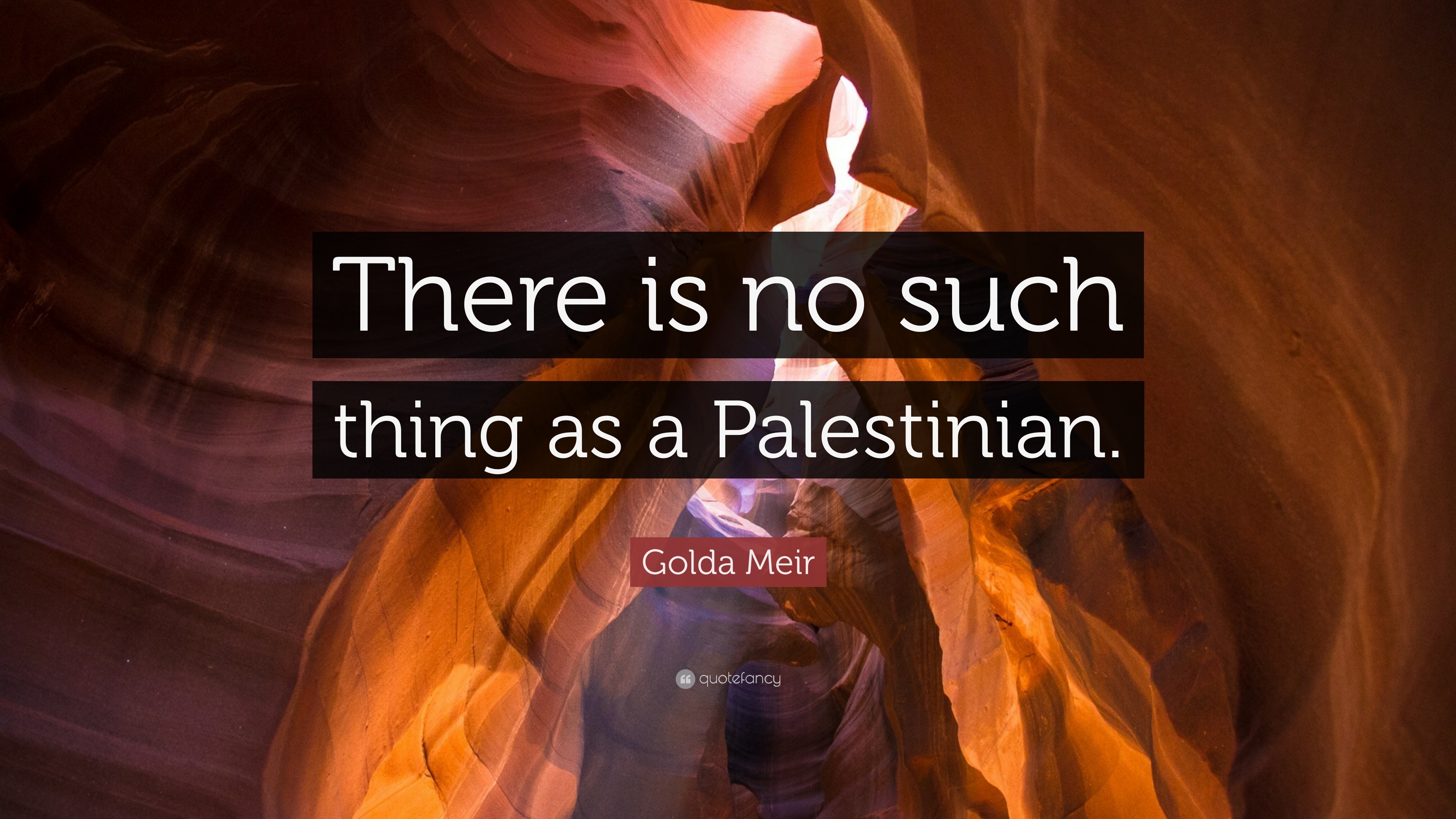
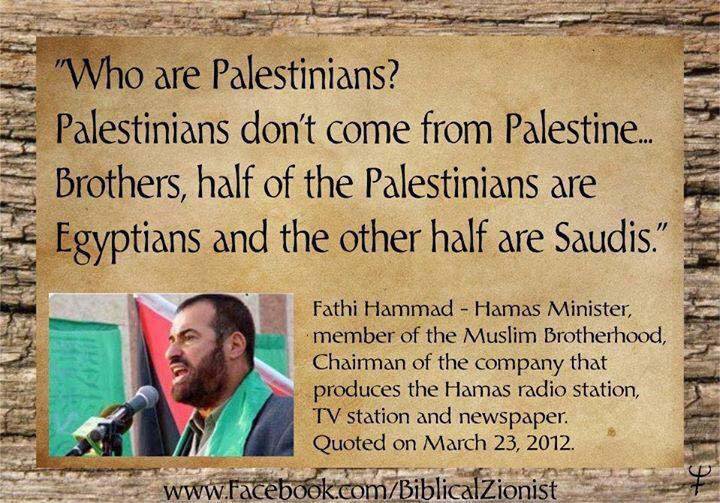
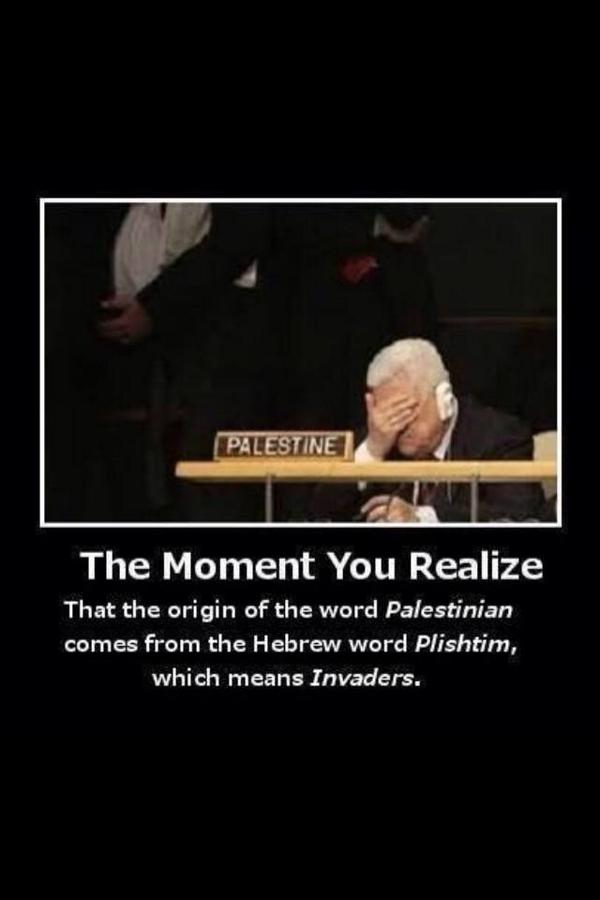
The problem with this is that a big piece of the argument for the State of Israel these days seems to be “there’s no such thing as Palestinians.  They just made it up.”

There are so many good memes I could raid to demonstrate this attitude.  Here are just a few:

Image result for no such thing as palestine

Image result for no such thing as palestine

(okay, same quote, two different memes)

Image result for no such thing as palestine

Even the Arabs agree (or at least a couple of Arabs):

Image result for no such thing as palestine

Image result for no such thing as palestine

Image result for no such thing as palestine

Image result for no such thing as palestine

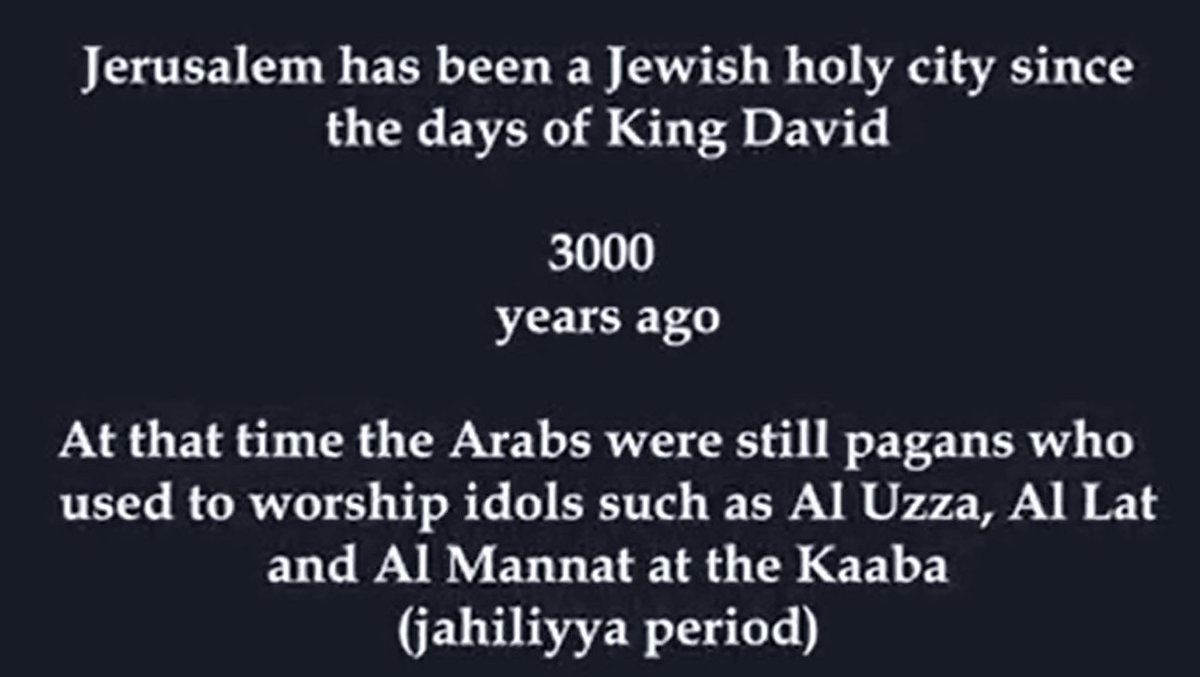
Some of these memes rely on the idea that not only are there no Palestinians, but that Arabs are some kind of Johnny-come-latelies to the region…

Image result for no such thing as palestine

Be that as it may.

(Here comes the part lots of folks don’t want to hear.)

Be that as it may.

Because I’m not touching any of these memes.  For all I know, they may be right.  In fact, I believe some are right.

The power of illusion

That doesn’t change the fact that today, for all intents and purposes, Palestinians do EXIST.

Why?  Because of the power of illusions. 

Explaining Israel: What the heck is going on here???

image

Do you know how to explain “the situation” in Israel if you had to?

If so, good for you.  I mean it.  I couldn’t – up until very recently.

Maybe you’re a keen Israel advocate, but I never have been.  I mean, I liked Israel, I thought in some vague and Biblically-informed way that we had a right and indeed a halachic obligation to be here.  But if you’d asked me about specifics, I would have been mighty short on details.

Which was why I was surprised when a friend sent me a link the other day to a typical article, at the BBC website, with the headline, “Israel postpones vote on new Jerusalem settlement homes.”  And she asked for my “take” on the situation.

The surprising part – to me, at least – is that I actually DO have a “take” now.  That’s strange because I’m not a “politics” person.  Never have been.  I avoid news if I can help it at all, and perhaps articles like this, shallow and lazy, are one reason why.  But when I sat down to share my views, I realized I needed to share a whole lot more by way of background. 

So I started to type, and this is what I got…

The Truth About Israel and the Middle East

I actually thought the situation in the Middle East would all become a whole lot clearer “on the ground,” you know; once we lived in Israel it would all make sense. I laugh now at how naïve that belief was.

Still, at least I do know some things, and I do have a “take,” for what it’s worth.


First of all…

Nobody wants to build where anyone lives, but it's a small country and we're all very close together. As Harper said when he was here, it is surprising (and probably feels very wrong) that Ramallah, capital of the Palestinian Authority (PA) region, is less than half an hour from Jerusalem. So things get a little squishy sometimes.


Second of all…

None of this has anything to do with Arabs who live in the non-disputed borders of Israel, squishy as it is. They are full Israeli citizens and enjoy – on paper and in many cases in reality, though I will admit that the reality isn’t 100% where our dreams are – full rights and privileges of citizenship, including health care and the right to celebrate the end of Ramadan in front of me in line at McDonald’s in our local mall so we have to wander around looking for seats and muttering, “what kind of Jewish country is this…” only because we are so obviously in the minority here in the North.

That’s not what the media mean when they say “Palestinians.” What they mean are the cousins of those Arab Israelis who live under the authority of the PA, formerly known as the Palestinian Liberation Organization (PLO), the terrorist organization.

For a while, they were considered “peace partners”

Top 5 non-touristy things to do with your mother in Israel

image

My mother left last week after a too-short 2-week visit before which she insisted that all she really wanted to do was “take the grandchildren to school.”  Fair enough.  It can’t have been easy coming back to Israel after the vacation of a lifetime she spent here with my father 9 years ago.  Basically, she didn’t want to do anything touristy… so we didn’t.

Instead, here are five of the activities I enjoyed most during her visit:

1. Haifa – why not?

I think this was the first full day my mother was here, and it was basically a “Why not?” inspiration.

My mother had spent about a week in Haifa on her trip with my father, so she was already familiar with the city, unlike 95% of tourists, and actually liked it… unlike me.  Okay, yes, I technically live in Haifa, but I’m kind of ambivalent about the city.  But we were sitting home one morning, it was a sunny day, and the shuk is literally one bus ride away.

So there was practically nothing to lose.

Oh, the other reason was that I’m crocheting a blanket and I needed a ball of yarn to match one I already had because otherwise I would have run out mid-project.  And there’s a yarn store I go to quite close to the shuk. So off we went, hopping on the bus and paying our 10 shekels or so for the pleasure.

The yarn store was actually a minor hit – nothing like the fancy stuff my mother buys, but it was mundanely familiar and she bought a little stitch-counter accessory for another 10 shekels.  Down the street was a store selling socks that actually go over the knee, which I desperately needed, and we each picked up a couple of pairs. 

(Though I confused my mother by asking the shop lady for “tights,” and she said they didn’t have “tights,” and my mother kept insisting they had tights right over there, until eventually I had to explain that “tights” in Hebrew isn’t the same as tights in English.  In Hebrew, it means leggings or bicycle shorts, depending on the length.)

While downtown, I also introduced her to Cofix and the pleasure of 5-shekel coffee, which we took with us to the shuk. 

And the shuk, as it turned out, was more charming than I’d remembered. 

I hadn’t been in over a year because I avoided it during shemittah – most of the vendors are Arab and I wasn’t sure about the produce there.  Also, all the citrus stuff was in season and every single vendor was offering samples.  I think my mother managed to eat the equivalent of about 5 oranges, just from samples.  I bought some small stuff, including local garlic, because more and more stores are just carrying the stuff in nets that comes from China, for no good reason that I can tell.

The best part was that with a short walk out of the shuk, we were back on the same bus, headed home, and inside of 25 minutes, we were here lounging on the sofa.

Or, perhaps the best part for you reading this, is that there are NO pictures.  I brought my phone, but it remained a phone for the entire time.  In Haifa, I guess, I’m not really a tourist at all.

2. Get your mother lost in Akko

image

This one was another “why not?”

Definitely not for everybody, but it’s super-close to here, so I figured it would be nice for a sunny-day wander through the Old City.  Unlike Jerusalem’s Old City, it’s easy to get to and on a weekday morning, there was plenty of parking (don’t try that on Shabbat, as I understand that Israelis from all over the country travel up there for hummus and more). 

Does terror in Europe mean the world has gone mad?

image

Does terror in Europe mean the world has gone mad?

Not unless you’re blaming the victims.  And you’re not doing that… or are you?

OK, sorry; probably you are.

Others have said this more eloquently than I, but I can’t sit silently snoozing through what I’m seeing. Here is just one of many memes going around Facebook last week.

image

Source: Twitter

The commentary seems to be of the opinion – and yes, people have actually said this – “The world has gone mad.”

Here’s just a random sampling – these all came up when I searched Google for “Aleppo, Zurich, Berlin,” and I don’t know any of these people personally.

imageimageimageimageimageimageimageimageimageimage

That’s a whole lot of solidarity.  So why does everybody seem to think the world has gone mad?

Because terror has left its nice cozy boundaries.

Where are those boundaries?  Well, you know, the dangerous places, where presumably, it belongs.

I think we all do this to some extent.

Since 9/11 the world has experienced the same thing, to varying degrees, in just about every country I can think of. The Hype cachere incident in France was just one of a number of attacks around the world that stood out. For me and those I know, the 2014 incident in the parliament buildings in Ottawa struck home since the person who did it was a convert to Islam and could have been anybody’s neighbour. Then there was the attack in Nice earlier this year.

(Okay, I have to share the following tasteless meme…)

Who Israel has instead of rock stars and supermodels (and why I’m glad)

image

Sure, supermodel Bar Refaeli captures her share of headlines here.  But you know who's a real celebrity in this country?

I'll tell you.

I was sitting down this afternoon in a little cafe in the mall, revving up my voice recorder, buffing up my pen & notepad, or whatever I do before an interview… when I noticed a woman standing outside the cafe, staring intently. 

After a second, she started waving - at the guy I had come to interview.  She waved timidly at first, shyly, and then a little more crazily when she saw that he'd spotted her there.  "Todah," she mouthed at him.  "Todah."  Thanks.

"He's like a rock star here," said the translator.

I nodded, numb, amazed.

Who was this instantly-recognizable mega-star that I had come to interview?

It was this guy:

image

What’s that you say?

Exactly!  Yeah, this guy.  (The one in the vest.  No idea who the guy in the white kippah could be.)

image

Yup, him.  Desmond Tutu’s buddy.

Why “Aliyah” is one of the hottest baby names in America

image

Here’s one fact that maybe you didn’t know about aliyah:  it’s an incredibly popular baby name in the U.S.

Since this blog is dedicated to covering All Things Aliyah, I thought I’d explore this phenomenon.  Maybe I’ll inspire someone to choose the name for their baby!

In the year 2011, “Aliyah” was actually the 133rd most popular name in the U.S.  It beat out far more common and predictable names, like – um – Jennifer.  And also classics like Mckenzie, Haley, Michelle and Stephanie.

Here’s the name Aliyah in Hebrew letters:

עֲלִיָּה

When writing it without vowels, people often include two lettter “yuds,” like this:

עלייה

The Hebrew meaning of the name is absolutely beautiful.  It means “going up,” “ascent” or “rising” (though here in Israel, this could refer to a spiritual ascent or just gas prices!). 

The main meaning of the word, for Jews all over the world is the “going up” involved in moving to the Land of Israel.  Which is, in fact, what this blog is all about.  A secondary meaning is “going up” for an honour in the synagogue, such as when people are called to read from the Torah.

But mainly, those are not the reason that people are giving the name Aliyah and related names to their babies in record numbers.

Most people are still naming their babies in tribute to the dead superstar singer Aaliyah Dana Houghton, better known just as Aaliyah (with two A’s at the beginning). 

But now that it has been a few years since her death, many more people are picking the name simply for its beautiful sound or meaning. 

This is a name with quite a few variants.  Some other common variations are Aliya, without the H on the end, Aleah, and the Hawaiian Alia, who apparently was a princess, and which means “great joy.” 

Arabs, on the train

image

I'm sitting on the train, it's late, and I'm on my way home.
Far too exhausted to be paying attention.

I step past a family of Arabs, their boxes spreading into the aisle.  There are grandparents, parents, a little girl.  They chatter all the way north.

I may be exhausted, but I can't help paying attention.  My life depends on paying attention around Arabs, I've been told. 

Even when they're travelling as a family?  Even when they've got a little girl babbling on their laps?

I don't understand their language.  Are they talking about me?  Arabic sounds horrible, guttural and strange.  I know Hebrew must sound that way to others; to me, it sounds like the Tanach, like poetry.  The Arabs' Arabic is sprinkled with Hebrew here.  They say "b'seder," and other Hebrew words.  Do other Arabs outside of Israel feel like they are contaminated with Jewishness?

I don’t know if they’re talking about me, but I’m thinking about them.  Not them, exactly. 

You know:  Terrorists.

Oh, yeah; that.

I'm writing a blog post about terrorism in Israel.  I start hunting for a picture of a knife to go with the post, then realize my screen faces towards them.  Will they know what I'm thinking about?  Will they think I am thinking about them? 

I quickly search for the word "girl" even though I do not want a picture of a girl to go with the post.  Slowly, I creep back towards the pictures of the knives, choosing a relatively tasteful one instead of something bloody and garish.  Not my style, anyway. 

The child is facing away from me, sitting with her parents.  The older people are facing in my direction.  Perhaps their eyes are old; perhaps they can’t see what I’m doing.

I modify the picture in furtive bursts,

Dear Family: she is safe, so please stop asking

image

Hi, all!

Just wanted to let you know that although we are all worried about E_____ when terrible things happen in Jerusalem, it doesn't help to email her to let her know about them or to ask if she is safe. 

Telling a person in that situation to "stay safe" implies that anyone who gets hurt is simply not making an effort.

If you want to send her a note, try something constructive, like, "I'm praying this will end soon," "I hope you're still finding ways to enjoy life," or simply, "we love you."

Please remember that, in Jerusalem as in any other place in this world, a person is safe until the moment they are not - whether that moment comes in a car, on a city street, in Canada's parliament buildings, in a hospital, or at the hands of a terrorist.

Statistically, her life expectancy here is higher than in most countries of the world, including the US. Though none of us know when our moment will come, for this moment, right now, she is safe.

I spent last Tuesday afternoon with her in Jerusalem.

How to choose a health care provider (kupat cholim) in Israel

image

Let's assume you'll never get sick in Israel, shall we?

My teacher in ulpan had a cute habit.  When we were learning about ailments, she refused to use the first or second person - "you're sick; I'm sick."  She would only let us talk about ailments in the third person:  "he's sick; she's sick; they're sick."

So in honour of Morah Sarah, let's do that here, too.  Let’s assume you’re going to pick a kupat cholim (health care provider) and never need to use it.

Because, I'll admit, I've been holding back. 

In all these years of blogging, I haven't really said anything about how to choose a kupat cholim, one of the four healthcare provider networks that exist in Israel.  I feel like I don’t know enough, but the truth is, I’ve been navigating this system long enough to know a thing or two.  So I’ll try to help you straighten things out as far as healthcare is concerned.  If you have questions, ask below and I’ll try to answer.  I’ll also give a list of links for good information at the bottom of this post.

What are those words again?  Practice saying them; you’ll be using them a lot here (but hopefully never in the first person):

  • קֻפַּת חוֹלִים / kupat choleem = sick fund, usually translated into English as “HMO” for people from the U.S. who don’t understand any other approach to healthcare
  • Note, the above is the vowelled spelling.  Without vowels, it’s usually spelled “קופת חולים” for clarity.  Pronunciation is the same:  kupat cholim.
  • It’s sometimes abbreviated as קופ"ח / koopach
  • קֻפָּה / koopah = “fund,” like a supply of money, but sometimes people use this as shorthand to refer to your particular health plan
  • The plural is  קופות חולים/ koopot choleem = sick funds.

How do I choose???

Here are the 4 choices (4 kupot cholim), in English alphabetical order:

  • כללית / Clalit
  • לאומית / Leumit (not to be confused with BANK Leumi!)
  • מכבי / Maccabi (pronounced ma-KAAAAA-bee, not the way English speakers say it in the Chanukah story)
  • מאוחדת / Meuhedet (the "h" is actually a "ch" but this is how they spell it)

All of these 4 have offices all over the country, though one may be more prevalent in a given area, which will probably factor into your decision-making.

These days, most new olim are asked to choose their kupat cholim at the airport when they arrive.  If you don't know your choice, however, you can still do it at the post office like in the old days.  There may be other ways to do it as well. 

Don’t let anybody force you to pick at the airport if you aren’t sure yet!

But the question everyone asks is:  how do I choose???

(Assuming, of course, that you and your family will never get sick!)

Google