Like the MamaLand Empire!

Have you Liked the AliyahLand adventure?
      ...and sign up for weekly aliyah tips by email (it's free).

Showing posts with label jewy. Show all posts

Things that are cool in Israel #12: Boureka Laws (with boureka and freezer puff pastry dough vocab lists)


Every once in a while, just when we start feeling Israeli, something new comes along that honestly charms the pants off of me all over again. Something like… the Boureka Law.

Yup, that’s really a thing. Read on to find out.

Tummy rumbles 

For supper tonight, at NR's request, we're making homemade bourekas. We bought the pastry and now we just have to make a bunch of fillings and bake them up. In case you're wondering, there are a million kinds of freezer pastry here. Probably in North America as well, but there, most of them weren't kosher. Usually, we just

Little Minyans Everywhere

So we moved!  And one of the greatest unsung features of our building is a very regular minyan.

This is temporary, due to corona. Building minyans are nothing new in Israel, but usually they're "lobby minyans" held only for "quickie" davening, like maariv after Shabbos, not on a regular basis, with a Torah, for longer davening. And definitely not Shabbos morning, when everybody tends to go off in their own direction.

Until now.
And one of the joys of life in a Jewish country, I've decided, is waking up Shabbos morning surrounded by prayer.
Not just mumbling, but all-out singing, with gusto.

(This picture has been making the rounds of social media... best guesses seem to suggest it's somewhere in England.  It’s definitely not Israel, so I guess this phenomenon has spread out a little.)

image

Last Shabbos, our last in our old apartment, I went out for a walk with the kids after we lit candles (with masks on!).  We passed at least a dozen little minyanim, so we started

Talking to Haredim (badly) about coronavirus

Disgusting... horrifying... sickening...
I’m sure you’ve noticed all the pictures in the media, in Israel and beyond, of haredim ("ultra-orthodox Jews") defying lockdown orders, congregating in public, hanging out in minyans and yeshivas, not wearing masks?

I have.
I've been shocked, horrified, disgusted.

But then I sat down with it for a bit and really thought things through.

One of the things I had to learn during my Master's degree, and for some of my other writing, is seeing the missing pieces of the puzzle.  Who or what aren't you considering in your sweeping generalizations?

This is called academic honesty, and the media could seriously use some of it these days.

Why are we so bad at talking to strangers?

imageAnother thing making me rethink this is Malcolm Gladwell's recent book Talking to Strangers (affiliate link), which is all about how we have trouble communicating with people who are unlike "us" -- however we define "us" at any given moment.  And about how these communication problems lead to bigger problems, possibly even the spread of pandemics.

(My conclusion, not his; his is

Do American Jews get a vote in Israel?

If you hate politics, I get it.  Please move along.  Just skip this post.

When I started this site, I feel like I made a promise to you and to myself that I wouldn't get political.  If you want to know more of my thoughts on getting political, in a book that weirdly doesn't get very political, I urge you to read my book, Getting Political: Scenes from a Life in Israel.  (Hey, even if you don't want to know my thoughts, pick up the book anyway!  Seriously, it doesn't get very political...)

And yet.

And yet.

There are times when I feel like I have to get political.

Because when you move to Israel, you cease, in some important way, to be a "diaspora Jew" and become an “Israeli Jew.”

You live here, you walk the daled amos basically every single day of your life, you breathe the holy and sometimes stinky air.

You live with the noise, or block it out with a nonstop stream of English podcasts and audiobooks.

You vote in the elections.

And I don't even have a post I can link to about the elections, because I haven't talked about politics.

But just for a minute, I want to.  So please cut me some slack.
Because I came across this article about how the Canadian diaspora, and presumably, the rest of the diaspora, can influence Israel.

And it scared me.

Spoiler alert: the way that diaspora Jews can influence Israel, apparently, is to participate in the World Zionist Congress coming up in October.  In fairness, it's held in Jerusalem, so they

Shutting Down, Starting Anew (guest post)


Sometimes, someone else says it better than I ever could.  Leonie Lachamish is a 41-year olah from the UK who lives near Jerusalem.

Every Erev Yom Kippur, while we were bringing up young children, I'd make sure the radio was on for the 2pm news so we could all hear the announcement that Israel's National Airport, Ben Gurion Airport (that functions 24/7) was closing down until after Yom Kippur (around 30 hours later) and then that all the radio stations were ceasing their broadcasts until

Can religious Jews celebrate Sigd? If not, why not?

image

My kids' school did an awesome thing last week.  At least, I think so.  Read on and tell me if you agree.

And before you go on – I just want to add.  This isn’t about politics.  It’s not about liberal / conservative.  It’s not about Orthodox Zionist / Haredi.  It’s just about how we treat one another, and our stories.

Author and scholar Thomas King has said, “The truth about stories is, that’s all we are.”  We are our stories, and our nation is our stories.  And this is about whose stories get heard… and whose don’t.

So here’s what happened:

Last week, my son’s school sent out an invitation via WhatsApp (if you don't live in Israel, you might not be aware of the wonders of WhatsApp -- for those who live here, it's the main way many of us communicate with the world beyond our homes, especially if we have kids in school...) to their annual commemoration of Sigd.

This was the main holiday of the beta Israel,

Our bad neighbour–a Yom Kippur story without a happy ending

image

There are a few things that make me sad here in Israel, believe it or not.  I’m about to tell you about THE thing that has made me the most miserable over the last 2-3 years.

EDITED TO ADD:  Before you read on, be aware – I was attacked on Facebook about some of the strongly negative thoughts I’ve expressed in this post.  I know it’s unlike me.  I’ll get back to the happy stuff soon, I promise – I am still in love with this country, don’t worry.  And I’ll share a couple of those negative comments below – just for fun.

I believe it’s important to share not just the good stuff.  Everyone who works in aliyah, whether professionally or just for fun, like I do, has a responsibility to present both the good and bad side of what goes on here, and I hope you know I always try to do that.  I love Israel, love aliyah, love our lives here -- but I'm also realistic and try to present the reality on the ground, not the rose-coloured glasses version some people claim is all they get before they arrive.

I’m saying this because I’ve gotten in trouble for posting negative stuff before.  Even though this site is about 90% gung-ho and positive, there are some people who simply won’t let you share your thoughts if they’re at all down.  If you’re one of those people, I suggest you st0p reading right now even though there’s an exciting bit with firetrucks a little further along.

So.  Still with me?

Good.

What's making me miserable these days is our neighbour.
We live in an almost completely religious neighbourhood, and he wears a kippah and you know, I wouldn't have been surprised if you told me before we moved here that there were evil, horrible people who wear kippahs.  I would have said, "Of course there are."  But meeting one in person is just making me sad, sad, sad.  It's bringing down my whole experience.

He plays music.  Super, super loud music.
We're on the ground floor.  In an apartment which is nearly perfect in terms of almost all

New Book Trailer: I is for Israel - An ABC of Peace

image

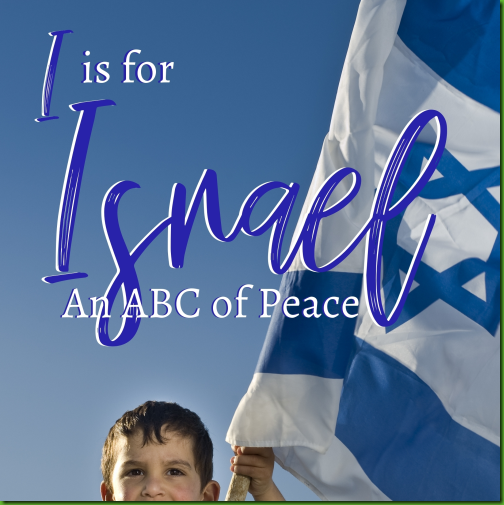
I wrote a new book about Israel!  It’s a little different from some of what I’ve written before – it’s a rhyming book about peace and coexistence called I is for Israel, which I wrote in response to a book that just came to my attention recently called P is for Palestine.  Rest assured – my book is better. :-)

I invite you to watch (and maybe even like!) this trailer:

I kind of vowed that this trailer would be one of the first things I’d get around to doing once the wedding was over and done with.  To find out more about the amazing process of creating this book, please see this post on my other blog.

Or – just check out the book itself!


Tzivia / צִיבְיָה


Things that are cool in Israel #10: Holy Sandwich Bar, Batgirl!

image

Since my last post about restaurants was kind of kvetchy, I figured I’d balance that with a quickie about something that was awesome the same evening we went to a place and they started giving me THE STORY (read that post and you’ll understand!)

Want to know what’s cool here???

You go to order your sandwiches, and they’re served up with a side of scripture.  That’s what.

Here you go, your typical Israeli deli takeout place, at the Kiryon, our local mall.  Notice anything?

image

Eating Out: How Kosher is that Restaurant?

image

There's a story some restaurants will tell you here if you ask if they're kosher.
It's a long, long story.  If you don't speak Hebrew, it can be daunting to understand the gist of what they're saying.
They'll take a long time telling it.
They'll pull out all kinds of documentation.
They'll explain some more.
They'll point all around the place.
They may even raise their voice, which is scary for a nice Canadian like me.

You may even buy food there, just to shut them up.  After all, they sure wave around a lot and pull out letters that look like they're from rabbis.

See, the problem is that Israelis know about kashrus.  I remember the first time I was shooed out of a non-kosher restaurant because I was obviously religious, but it has happened a few times since. 

Even coffee, which I might have no qualms about buying in a non-kosher place in Canada, whereas here, they might practically refuse to serve me, which I see as a kind of respect for my practice - even if it's different from their practice - and I like it very much, except the one time, very early on, I had to pretty much beg a server for coffee and then decided it wasn't worth it and left.

In Toronto, if I stuck my head into a typical restaurant and asked if it was kosher, they'd probably say something like...
"Ummm, I dunno..."
"We do have vegetarian items..."
"Let me check with the chef..."
"I think so..."

One of the ways that you can tell, outside of Israel, if a place is kosher is to look at the clientele.  If people with kippahs are eating there, it's a pretty good sign.  In Israel, that doesn't always fly.  A totally-kosher mehadrin place may be full of people who look completely non-religious, and there may just be a few kippahs in the crowd at that local non-kosher McDonald's branch.

The other thing about Israelis is that they know how to talk.  Think the Irish have the gift of the gab?  Well, they may, but Israelis are super-good at pretending it’s theirs.

Here, we've also learned early on that you don't ask if a place is kosher.  You ask if there's a certificate, the teudah.  The teudah means everything, almost always.

If you ask if it's kosher, they may say yes.
Ahhh.... but if you ask to see the teudah, that's when you get the long, long story…

Things that are cool in Israel #8: Barbie’s Book of Tehillim

image

You know what's cool about about Israel that I don't write about often enough?  Prayer.
(Yeah, yeah, yeah, kindly overlook the fact that I haven't blogged here in over a year.)
Bevakasha.

Because I really want to talk about prayer for a second.
Prayer so cheap you take it for granted.
Specifically, books of Tehillim (Psalms).  Here in our local "stock" shop (Max Stock Kiryat Chaim), they sell bulk packages of keychain sifrei Tehillim, 7 for ₪10.  If you're in the U.S., that's less than $3. 

How awesome is this?

image

Chanukah in Israel: why it’s simply better here

image

"Do they really celebrate Chanukah in chu"l???" (Outside of Israel - see this post!)

This Sunday, I brought English Chanukah songs for the girls I tutor.  One of them was amazed and asked me this outright.  She couldn’t believe that even in Canada, we celebrated Chanukah.

She knew that Jews everywhere celebrate most holidays, but Chanukah is so tied up in the Israeli psyche, our most nationalistic holiday besides Yom HaAtzmaut (Independence Day), that it must have seemed impossible to celebrate anywhere else.

And I have to admit: she’s right. 

Sure, you can celebrate Chanukah in chu”l, but you can’t feel it the way you do here.

I've always been humbug about Chanukah.  It's not that I hated it, but when we lived in Canada,

Who Israel has instead of rock stars and supermodels (and why I’m glad)

image

Sure, supermodel Bar Refaeli captures her share of headlines here.  But you know who's a real celebrity in this country?

I'll tell you.

I was sitting down this afternoon in a little cafe in the mall, revving up my voice recorder, buffing up my pen & notepad, or whatever I do before an interview… when I noticed a woman standing outside the cafe, staring intently. 

After a second, she started waving - at the guy I had come to interview.  She waved timidly at first, shyly, and then a little more crazily when she saw that he'd spotted her there.  "Todah," she mouthed at him.  "Todah."  Thanks.

"He's like a rock star here," said the translator.

I nodded, numb, amazed.

Who was this instantly-recognizable mega-star that I had come to interview?

It was this guy:

image

What’s that you say?

Exactly!  Yeah, this guy.  (The one in the vest.  No idea who the guy in the white kippah could be.)

image

Yup, him.  Desmond Tutu’s buddy.

On Rosh Hashanah, it’s BYOM (bring your own machzor)

image

Rosh Hashanah’s coming, so it’s time for a public service announcement. 

Things here in Israel are NOT the same as they are wherever you come from.  That includes shul on Rosh Hashanah and Yom Kippur.

You probably won’t need tickets, and I don’t know of any shul in Israel that will kick you out if you haven’t signed up ahead of time, but depending on the shul, they might not have a lot of space for you. 

Also, check around your neighbourhood carefully – the davening (prayer services) is very different in different types of shuls.  And I’m not just talking about Ashkenazi and Sefardi (Mizrachi) shuls. 

Yeshivas, for example, may have a longer, more drawn-out davening that’s enjoyable if you like something more spiritual, while “stam” Israeli shuls may have more of a “get in, get out, get home” type of approach.  Most shuls start at 8 am on yom tov, but the ending time really varies, from 10:30ish across the street from me to as late as 1 or 2 in some places.

(So if you’re expected somewhere for either of the lunch meals, it’s extra important to co-ordinate with your hosts so you get there when they want to start.)

If you’re new to your area, ask around to find out which shul is more likely to offer you the best experience.  That depends, of course, on what your criteria are.  Such as whether you like singing or prefer to avoid it at all costs, like at the shul across the street from me, where any necessary musical touches are grudging at best.

Also, if you’re a woman, ask other women – your experience might be very different from what a man would encounter in the same shul.

One thing you won’t get here that you may or may not be used to – calling out page numbers.  Most Orthodox shuls outside of Israel don’t do this either, but our shul in Toronto did because it had a kiruv (outreach) bent. 

Should you change your name when you make aliyah?

image

For years, I thought this was a no-brainer.  When in Rome, pick a name like the Romans do… or something.

Apparently, I was dead wrong.  It turns out there are a million reasons not to change your name when you make aliyah:

  • it will confuse and perhaps anger your family and friends
  • people will think you've become more religious (maybe "crazy religious")
  • people will think you're turning your back on your old life
  • you've built a career and reputation in your name
  • you'll have legal problems using the new name
  • you'll never adjust to being called something new

Interesting.  Notice that these are the same reasons many people give to not make aliyah in the first place?

Since you're already taking that giant step – or thinking of taking it – it seems a much smaller leap to give yourself a shiny new handle.  Especially one you've chosen yourself, that you'll love hearing every day and seeing on all your shiny new paperwork.

[By the way, the Hebrew words in the image above are “olah chadashah,” which means “new immigrant to Israel” in the feminine form.]

My grandparents’ “aliyah” to Canada

My grandparents were olim, of a sort.  Well, they were immigrants.  Same thing, right? 

Separately, they found a way out of Poland, where they'd grown up as "Wolf" and "Chana Rivka."  When they came to Canada, they morphed into "William" and "Rose."  They named their kids Albert, Charles and Dorothy.

Home Sweet Home: Sorting us all out

image

Did you have one of these shape sorters as a child?  (Maybe your kids did!)

Look at all those shapes.  Some of them are very similar - the pentagon and the hexagon; the trapezoid and the square; the triangle and the little rounded cone-triangle (is there a name for that shape?). 

(Babies were smarter in those days, I guess - newer shape sorters are much simpler.)

The fascinating part was that no matter how similar the shapes, they wouldn't slide nicely into the wrong hole.

So I think I'm like that, a bit.

We're back in Israel now.  We got home at midnight last night. 

And so now, I can tell you my secret:  I was half expecting to hate it here.  Maybe more than half.  My daughter was in tears as the plane was taking off, leaving behind so many of the people she loves in Canada.  I braced myself, just in case I got here and felt SO depressed to be back.

3 not-entirely-unpleasant mikveh surprises you’ll discover in Israel

image

If you're a religious woman, you know all about going to the mikveh.  Once a month or so, for much of your married life, it's just that - a fact of life.

Women who move to Israel sometimes expect the mikveh to be pretty much the same as what they’re used to.

And (pretty much), it is.  But in a few important ways, it's different.  Not necessarily worse, just different.  Since I’m still in Canada, a friend back in Kiryat Shmuel helped put together this list of three things that may surprise you when you go to the mikveh in Israel.

1.  Bring your own supplies.

Depending on where you are, mikvaot in North America can seem almost like a luxury spa

Israel’s Children: A Christian Perspective from 1897

image

I’m not blogging this week, as we are away, flying to chu”l (what the heck is chu”l???).

But I was fascinated a while back to stumble across this old public-domain article from 1897, first published in a Christian periodical called The Biblical World. The article is called Children in Palestine, written by Anna H. Jessup.   (It’s available in the public domain here.)

Interestingly, this was the same year as the First Zionist Congress.  The author doesn’t seem to know yet that big changes are in the wind for Israel, then known as Palestine.

Certainly, the author doesn’t seem to like any of “Palestine’s” children – except perhaps the Christian ones.

I sort of love how this article reflects all the weird racisms and prejudices of that time period.  Of course, I’m also horrified by it as well.  (Don’t read it if you’re easily offended, maybe?)

But I think it’s helpful to think about how the situation has changed and evolved over the last 120 or so years, so far beyond what any of the players, either at that Zionist Congress, or reading that Christian magazine, could have envisioned.

I’ll be back to blogging in no time.  In the meantime… I’d love to hear what you think about this crazy, racist report on the State of Affairs in Israel (aka Palestine, back when the Jews were Palestinian) circa 1897.


  Children in Palestine

In writing of the children in Palestine at the present day, it must first of all be clearly understood that the people who live in Palestine are not all of the same race; that the inhabitants of different sections, or sometimes even of two villages near together, are of different religions, with sharply drawn lines of separation in customs and beliefs.

Thus we find Druses on Mount Carmel ; Metawileh in northern Galilee ; Bedouin in Jericho to the south and throughout Moab ; Circassians in their colonies east of the Jordan ; both Catholic and Greek Christians in Haifa, Nazareth, Bethlehem, and nearly all the cities; Jews in Safed, Tiberias, Jerusalem,

A few prickly questions– the lie of the sabra

image

Do you know what a sabra is?

It’s the fruit of the prickly-pear (Opuntia) cactus.  It looks a little like the picture up above.

Ironically, the sabra, the very fruit that Jews around the world identify with Israel is actually not a native here.  It was imported from the Western U.S.

By the way, the word and concept “sabra” are not pronounced “sabra” in Hebrew.  Another of those Big Lies of Hebrew school.  The Hebrew word for this North American transplant, this “oleh,” so to speak, is  צַבָּר / tzabar.

According to Wikipedia, a “Sabra” is an “informal slang term that refers to Israeli Jews born in Israel.”

A few weeks ago, someone I knew decided to make trouble, and at a mixed gathering of Arabs and Jews in Haifa, asked an Arab woman if she considered herself a sabra.  She said, “of course.”  (I love getting to know troublemakers.)

Haveil Havalim: Bye-bye, Beha’alotcha

image

Yup, I’m super, super, super… late.  This will be my last time hosting Haveil Havalim, but I apologize to those who submitted posts for my lateness; it was not intentional.  I was supposed to post motzaei Shabbat, and it totally slipped my mind.

What is HH?

imageIt’s a weekly roundup of what’s new and great in the Jewish / Israel blogging world.  I host once a month to give you a taste of what other great blogs are out there that you might enjoy.  Hopefully, you’ll find some new favourites.

  • Next week’s carnival will be hosted by the indomitable Batya over at Shiloh Musings

  • For more details, a complete schedule of future issues or to host an upcoming issue, please join the HH facebook group.

Don’t forget – the point of social media is… SOCIAL.  Stop by and visit some of the other blogs listed here.  Leave a comment to let them know you came from HH!


How is 2015 different from 2005?

The good (?) news is that there aren’t a lot of people participating in HH, or any other collective bloggy endeavour, these days.

Is this because personal blogs are “over,” at least in some way?  It’s possible.  It’s hard to believe that people in 2015 aren’t as interesting as they were in 2005, the heyday of blogging.   In fact, I don’t believe it.

Google