How are the ants where you live? Growing up, I met two kinds of ants: black and red.
Black ants were friendly ants you could gather up and experiment with. I wasn't the one with the magnifying glass, but these guys were slow and inoffensive enough that you could, if you were so inclined, corral them, then sizzle and pop them by magnifying the rays of the sun.
Red ants, well, you didn't want to mess with them, because there were rumours that they'd bite you. But they were also shy ants, and if you kept out of their way, they'd mostly keep out of yours.
The creepiest ant incident in my entire childhood was one time, on a family trip, when my toddler sister sat down by the roadside (maybe we were stopping to fix the car in some way?) and then started shrieking because she'd sat on a massive anthill. She was always doing stuff like that.
So presumably there were some aggressive ants within driving distance of our home. But they weren't exactly a clear and present danger.
There were also certain facts I learned about ants. Maybe you learned them too. Spoiler alert: FACTS THAT TURNED OUT TO BE 100% WRONG HERE IN ISRAEL. Facts like… Ants love crumbs
Running out to the car to get something? Just popping out to the makolet? Just let folks know you'll be right back... like by saying you'll be right back. Right?
Wrong. Not in Hebrew. In Hebrew, you don't say, "I'll be right back."
(Okay, you can, before everybody rushes in to correct me -- there IS an expression, אני תכף חוזר / ani techef chozer / "I will immediately return," or תכף אשוב / techef ashuv / which literally means this very thing. But I would argue that few people use these expressions in real life, just write them on signs in shop windows.)
Instead, usually, you say, אני כבר חוזר / ani kvar chozeir / "I'm already on my way back." Even while you're turning around and walking the other way.
I figured it was time for a new post! I know, I haven't posted anything in so long, and now this is like 3 in a 2-week period. Blogging is like that sometimes.
And speaking of TIME... this post is all about time. Specifically, the words we use to talk about it in Hebrew.
We use words for time a lot, which makes them extremely useful.
We say things to each other like:
"What time is the party?"
"How much time do you have?"
"How many times have you eaten blue cheese?"
"I sometimes think I'll try it someday."
In English, all four of those are the same word: time.
Not so in Hebrew.
What time is the party? / be’eyzo sha’ah hamesiba / באיזו שעה המסיבה
How much time do you have? / kama zman yesh lach / כמה זמן יש לך
How many times have you eaten blue cheese? / kama pe’amim achalt gevina kechula / כמה פעמים אכלת גבינה כחולה
I sometimes think I’ll try it someday. / leefameem ani choshevet she-anaseh yom echad / לפעמים אני חושבת שאנסה יום אחד
What are the time words I’ve used here?
Sha’ah / שעה – usually, hour
Pa’am / פעם – usually, time as in “how many times” (think of it as “occurrence”)
Zman / זמן – usually, time as in the abstract noun, like “we don’t have much time.”
For the fourth sentence, with sometimes, you're going to need a
You've been reading these posts for a while. How about I reward you with a gift?
It's a single word that works as a magic key, opening doors here like no other word can do -- including "please" (בבקשה), which really doesn't go a long way at all in Israel.
Actually, I’ve come to believe that saying please is actually a cue for whoever is supposed to be helping you--in restaurants, government offices, or wherever--to ignore you for a certain period of time. Like counting to 10 when you're angry. At least, they kind of stare at me cluelessly when I do it. I’m not kidding. It will only slow you down here. Try it!
So what's the word?
Well, it's a little word that makes everything POSSIBLE...
Because it means "possible"!
And the word is... אפשר / efshar.
(And okay, since I’m not the grammar maven that you might be—technically it means something a lot more like “possibly,” but for the rest of this post, you and I are going to agree to overlook grammar and technicalities almost entirely… if you want a more linguistically inclined site, check out Balashon – currently on hiatus but nonetheless packed with great info! Also a terrific pun: balash means detective, lashon means language.)
Now, in English, the word “possible” isn’t used nearly as often in Hebrew. Here, you can use this little word instead of “please” in a huge variety of situations.
For example, in a restaurant:
Efshar ketchup? / Literally, “possibly ketchup?” but it means
When you move to Israel, there’s inevitably going to be stuff you miss: people, places, things. So it’s important to be able to talk about missing stuff in Hebrew. On the oral part of the ulpan exam, that was one of the things they asked us about: how we’re getting used to life in Israel.
In English, we talk about missing stuff all the time. When I say “missing,” I mean the feeling of longing when you’re not around.
What do we mean when we talk about MISSING?
We do have other types of “miss” in English, more than one, in fact, like...
Missing a train, which is לְפַסְפֵּס / le’faspeis in Hebrew, lo aleinu (we should never know such sorrow).
Or missing out, לְהַחמִיץ / le’hachmitz, as in the FOMO (fear of missing out) when all your family back in Toronto is going to see The Book of Mormon while I’m stuck here in Israel going to see some two-bit circus (you may recognize the root of this word from the word chametz at the seder... it also means when something ferments, or goes sour, meaning you’ve missed the best-before date).
Or missing the mark, לְהַחטִיא / le’hachtiy, as in a blog post which promises to talk about one thing and then goes on and on about all kinds of irrelevant homonyms.
There’s even the kind of missing where you’re just about to make challah late, late, late on a Thursday night and discover that you’re missing flour – לַחסוֹר / la’chsor, meaning “to lack.” (You can also use it as in: חסר לי הקמח / chaser li hakemach / “I’m missing the flour”.) This is the kind of missing that is sometimes translated as “want,” as in, “for want of a point, this blog post was lost.”
Ahem.
But none of those is what I’m talking about here. I’m talking about missing your mother, your sisters, your son in Toronto—they don’t call, they don’t write (except when they do, but I’m practicing to be a bubby someday), and some weeks we are reduced to merely clicking Like on each others’ things to remember that we are all out in the world somewhere.
In English, the word “to miss” is nicely transitive, meaning you can’t just miss, in the same way you can’t say, “I love” or “I admire.” You have to miss something; you miss somebody.
Hebrew has that word too, fortunately. Unfortunately, it’s a silly word. A word you might not be able to say without giggling, and which in fact sounds a heck of a lot LIKE giggling when you say it. Here it is: לְהִתגַעגֵעַ / le’hitgageya.
(What? I put it in the headline so the surprise was ruined? Drat, drat, drat... my
Are you having a good day? Do you have a cold? Did you have a nice time?
I’ve said a million times that English is a lazy language compared to Hebrew, and here’s yet another way it’s true. In English we have this awesome verb “to have,” which we use for almost everything. We even use it to help other verbs: “Had I known you had it, I would have chosen hot chocolate!”
But guess what?
This word is completely, 100%, missing from the Hebrew language. In other words: it has no has. When I’m teaching, this is one of the most difficult things to get across – why kids need to be able to conjugate “to have” in English when it doesn’t exist at all, as a concept, in their native language…
But instead of “to have,” Hebrew has numerous different forms that you use depending on what, exactly, you want to say about you and the thing you own. Here are just a few. Well, okay… six.
Six Awesome Ways to Talk About Having in Hebrew
1. Yesh! – “There is”
This is the classic. Back in Hebrew school, I learned the way around this: “yesh.” Yesh has two meanings: to possess or to indicate.
To Indicate: you can indicate an object by saying, יש עיפרון על השולחן / yesh iparon al ha shulchan and it means “there’s a pencil on the table.” Basic stuff (and hey, I’m not a grammar guru, so if there’s a better word than “indicate,” just let me know politely!).
To Possess: You can also say יש לי עיפרון / , yesh li iparon, which literally means “there is to me a pencil,” but basically means, “I have a pencil.” Only without saying have. The pronoun here conjugates nicely, so you can give anyone you like a pencil (thanks very much!): יש לנו עיפרון / yesh lanu iparon / “there is to us a pencil” = we have a pencil.
So far so good. For an English speaker, it takes a little thinking, because in English, all you have to do is figure out the simple pronoun (I, you, we, etc.) and then add HAVE, whereas in Hebrew, you need to conjugate (li, lecha, lach, lanu, etc.).
So that’s yesh, and it takes care of having – kind of.
2. Shel + Suffixes – “Of”
But what if you want to say you OWN something? “We have a car. The car belongs to us.”
Hebrew school taught me the easy way to do this – האוטו שלי / ha-oto sheli / “The car is mine”. But it doesn’t mean belonging. This form is far more passive. The car just sits there and “BE”s mine.
I already know people are going to get mad when they see a headline like this.
Hard-line Israel supporters might say I’m questioning things that should not be questioned. Meanwhile, liberal non-Israelis will say it’s an idiotic question – so long as someone defines himself or herself as “Palestinian,” that’s what they are.
(The liberal world is very into self-definition these days. I always have been, too. My philosophy has generally been that for the tricky stuff, we can let Hashem decide. Baruch Hashem, I don’t have to be in charge of the universe.)
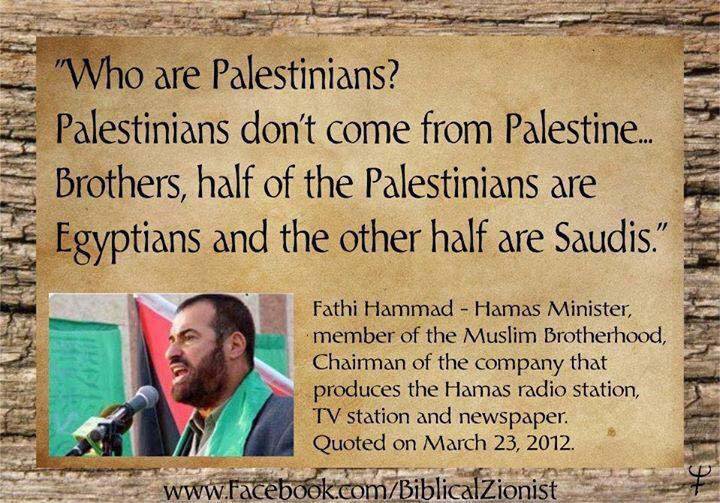
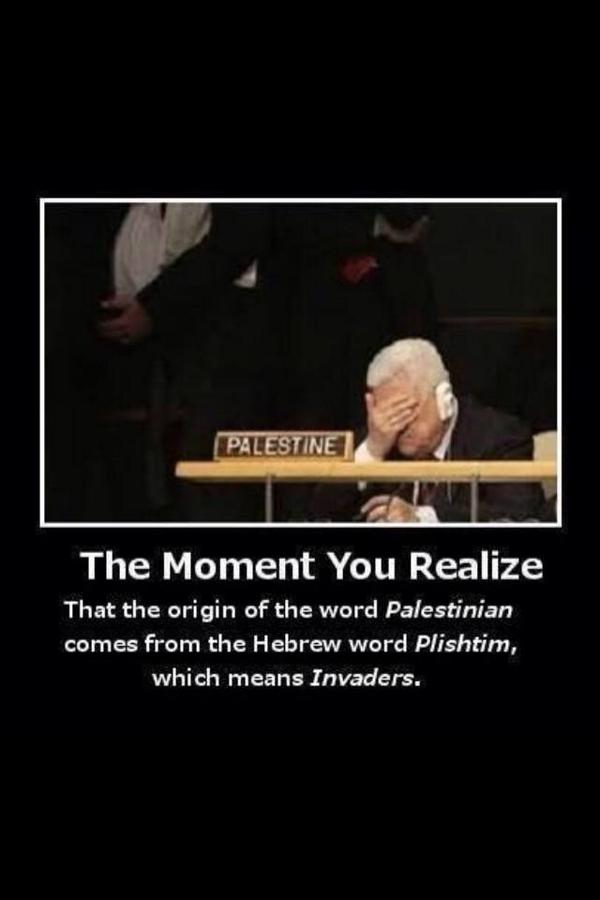
The problem with this is that a big piece of the argument for the State of Israel these days seems to be “there’s no such thing as Palestinians. They just made it up.”
There are so many good memes I could raid to demonstrate this attitude. Here are just a few:
(okay, same quote, two different memes)
Even the Arabs agree (or at least a couple of Arabs):
Some of these memes rely on the idea that not only are there no Palestinians, but that Arabs are some kind of Johnny-come-latelies to the region…
Be that as it may.
(Here comes the part lots of folks don’t want to hear.)
Be that as it may.
Because I’m not touching any of these memes. For all I know, they may be right. In fact, I believe some are right.
The power of illusion
That doesn’t change the fact that today, for all intents and purposes, Palestinians do EXIST.
It’s way too early to be thinking about fall, but there you go – that’s what I’m thinking about. I accidentally put on my “Elul Hebrew Songs” playlist before Shabbos and ended up listening to a whole bunch of pre-Rosh Hashanah songs and getting into THAT kind of mood.
And with all these songs comes a word that comes up all the time in the fall in Israel that I had never really even thought about before… שַׁלֶּכֶת/ shalechet.
Morfix translates the word as “fall (of autumn leaves) ; (botany) exfoliation.” Google, as “autumn, fall, or effoliation.” But you’ll have to take my word for it – nobody says this in English the way Israelis do here, with its many heaped-on layers of meaning.
This is a lovely word that is a haiku unto itself. It means, vaguely, “fallen leaves on sidewalks.” But it also refers to the crunchiness of the leaves and the mood of the leaves and the ending-and-transitioning that is fall and even, kind of, winter in Israel, which isn’t really a season but more a dampness that descends for a while and then lifts.
It’s certainly not just “falling leaves” – because when people want to talk about falling leaves, they say עלי שלכת/alei shalechet, which would be redundant if shalechet was all about leaves.
If you ask an Israeli, there are two places in the world: Israel… and chu”l.
Chu”l, like every Hebrew word with a “choopchik” (double-quote) in it, is an abbreviation. In this case, it stands for חוץ לארץ / chutz la’aretz, or “outside of Israel.” (Sounds like “chooool.” Rhymes with “rule,” like the Golden Rule.)
And yup… that means, “every place in the world besides Israel.”
Because, you know, Israel is just so very, very big. Kind of dwarfs the rest of the world by comparison, don’t you think?
Well, okay. We know Israel is not very big. But Israel is a tiny country with a HUGE ego. A big sense of itself and its footprint in the world. Not utterly unjustified, given its continuing prominence on the world stage, but still… sometimes, Israelis do push it a little.
This happened in ulpan once. My teacher handed out a list of celebrities and we had to decide if they were “famous” or “famous only in Israel.” Some were obvious, like Madonna and okay, Benjamin Netanyahu. That was about it for famous Israelis.
I was trying to be honest, but I didn’t want to break her heart by telling her that for the most part, all the “famous” Israelis she’d listed would be persona non grata if they showed up in Canada or the U.S.
There are many Hebrew words for which there’s no tidy English translation.
Like what? How about lehitlabet/ הִתְלַבֵּט, which means “to be conflicted about something” or have doubts, be uncertain, or be in the middle of pondering something. The word just doesn’t exist in English.
But sometimes, it happens the other way around as well…
Like the word kadur / כַּדּוּר, which technically means “ball.” Simple, right?
Except that the concept of “ball” in Hebrew extends far beyond where its boundaries are found in English.
Considering it’s called the Holy Land, and considering that so many of us move here for religious reasons, I guess it’s strange that I haven’t said anything about going to shul before now.
When my sister was here visiting last year, she also mentioned that she’d been all over the place but hadn’t set foot in a shul.
Life in Israel is like that.
Are you wondering what shul will be like when you make aliyah? Here are 5 things that may surprise you when you finally get there:
1. It’s not called shul.
This may be obvious to you, but then, you’re probably smarter than me. Smart enough to put two and two together and realize that Ashkenazim like me, and our quaint Yiddish expressions, are not in the majority here. (Us Ashkenazim tend to see the world through Ashkenaz-coloured lenses.)
Shul here is known as בית כנסת / beit knesset. Everybody calls it that – even Ashkenazim.
Which is another thing, by the way: in Canada, I grew up thinking of the Jewish world as divided into Ashkenaz and Sefardi. It turns out we’re the only ones who call them Sefardim. Here in Israel, these “eastern” / southern Jews are better known as “eidot hamizrach,” or “mizrachi” (which means eastern, go figure).
But within that “Sefardi” realm, there are so many different types of – uh-oh – shuls. Just within a couple of blocks of here are Moroccan, Tunisian and Yemenite shuls. Whereas, since we’re a minority, Ashkenazim tend to have the local “Ashkenaz” shul, and not have as much of a choice. We’re black and white; they’re a whole entire rainbow.
And the truth is, if you accidentally say shul, everybody will know what you’re talking about. I don’t even think you’ll offend anybody. But that’s not what they call it.
I said something about “tens” of something to Akiva the other day and he said “Tens… of what?”
Because in English, we only say “tens” when we’re about to say “of millions.” And follow it, usually, with “of dollars.”
Despite ostensibly switching to the metric system tens of years ago, Canada has not officially gone over to a metric mentality.
A truly metric mindset would have no trouble acknowledging the fact that… dozens do NOT make our life easier. Dozens make things harder and more complicated.
If you think about it, a “dozen” is just about the most counterintuitive number. Very few of us have a dozen fingers… though I tried harder than most of my parents, one of my kids having been born with eleven.
Dozens just don’t fit inside our brain neatly, the way tens do.
Twelves don’t make any more sense than any of the numbers that follow. And they make a good deal LESS sense than tens.
Which is why, here in Israel, when multiples of things happen, they happen not in dozens (unless you’re buying eggs), but in TENS – עשרות (asarot).
What’s the strangest word in the Hebrew language? I’m totally open to your vote(leave it in the Comments!), but to my North American ears, it’s got to be the word “sneef.”
It means “branch,” as in a branch of a store, of the post office, or of anything else that has different locations.
You can go to the sneef ha-doar, your local post office branch, a sneef of one of the many active youth movements like Bnei Akiva, or a sneef of your favourite (kosher) McDonald’s. (Their website will even help you locate a kosher sneef.)
To Israelis, it makes perfect sense. But to me, it sounds like something Dr. Seuss made up. Or maybe that’s Sneetches?
Apparently, the word has an illustrious history, and actually comes from the gemara (Talmud).
This has got to be one of the most subtle, flexible words in the Hebrew language.
Part of its beauty is that it doesn’t have an exact translation. Morfix says it means, “it is worthwhile, feasible.” It’s probably true, but believe me, kedai gets a lot more use than those English words ever have.
Every time someone says that Israelis are all aggressive and in your face, lacking any semblance of subtlety, a kedai loses its wings and falls to the floor in a coma. To Israelis, kedai is the essence of subtlety and tact.
If you want to suggest that it’s better to do something – it’s kedai.
If you prefer one option over another – it’s kedai.
You know how much I love exposing the Great Lies of Hebrew school. (Having been a Hebrew school teacher, millennia ago, I’m allowed.) So here’s today’s.
How do you say “of” or “belonging to” in Hebrew? Every schoolkid knows this, right? Shel (שֶׁל)… easy!
Not so fast, kiddo.
In fact, the second part is more correct than the first. “Shel” means belonging to… and not so much “of.”
Imagine you’re signing up volunteers for a school trip, so you want a list of parents. So in Hebrew-school Hebrew, that ought to be רשימה של הורים / reshima shel horim. But, in fact, that probably means something closer to “list belonging to parents,” which is not what you want to say at all.
Another example: I went to the University of Toronto (yay, BA in philosophy!). The first few times I struggled to say this in Hebrew, I was saying אוניברסיטה של טורונטו / universita shel Toronto. It didn’t sound right, even to my ears.
Why? Because there’s no belonging – the university and Toronto go together, but not in an ownership way. Neither one owns the other – they are simply two nouns kind of leaning together for mutual support.
In English, we most often do this with “of”: list of parents, University of Toronto, children of Israel.
But in Hebrew, when you have two nouns walking along together, leaning on each other, with no clear possession, you use the “leaning” form: סְמִיכוּת / smichut.
(say it! smeeeeeeeeee-chhhhhh-oot)
Did I mention Hebrew school? That’s actually a great example of smichut. Even in English, you wouldn’t say “School of Hebrew” (though you might say School of Rock!). You just say “school” and “Hebrew” and everybody understands how it fits.
In Hebrew, the word for school, as you learned in School of Hebrew, is actually two words: “book house” / בֵּית סֵפֶר / beit sefer. You take the book and the house and you just kind of lean them up together. And everybody understands.
For singular masculine nouns, it really is just that easy (Well, okay, not quite – why is it בֵּית / beit and not בַּיִת / bayit sefer? Shh… never mind.).
If the first noun is feminine, you’ve got a little more work to do: add a “tav” at the end before joining it with the second noun. University, for instance. Ends in “a” and so it’s a regular feminine noun. And instead of אוניברסיטה של טורונטו / universita shel Toronto, my alma mater becomes אוניברסיטת טורונטו / universitat Toronto.
And that list of parents? רשימת הורים / reshimat horim. The little “t” sound tells you there’s another noun coming – very handy.
Which is all well and good until you come to the plural. What’s the plural of beit/bayit? Yeah, okay, it’s irregular, but you may have learned it anyway: בתים / batim.
But if you have more than one school, you don’t say batim sefer. In that case, when you’re using smichut, the final “mem” falls off: בתי ספר / batei sefer.
Which brings us to the Children of Israel. Child = בֵּן / ben. Child of Israel, two nouns together, would be בן ישראל / ben Yisrael (leaving out “of”). But even though children = בנים/ banim, when it’s “leaned” against another verb in smichut, the final “mem” falls off, leaving בני ישראל / bnei Yisrael.
Lots of olim, it turns out, have problems when they try to simply translate English sentences, word for word, into Hebrew sentences. Compared to Hebrew, English is a wordy language, and often unnecessarily vague. Often, the little words turn out to be meaningless, or at least, untranslateable in a literal way.
Even though I say these are the Lies of Hebrew school (שקרי בית ספר עברית – quadruple smichut!), they’re not really lies at all: they’re just oversimplifications. Useful, perhaps, for teaching kids. Less useful for speaking Hebrew without getting laughed or stared at.
And that is all my words (מילים שלי / milim sheli – no smichut!) on this fascinating subject. What about you, blog readers (קוראי בלוג / korei blog – smichut!)… If you’re already in Israel, what Lies of Hebrew School have you discovered here?
Here’s an ad I spotted on the train this morning showing a smartphone with headphones trailing out: “I’ll talk to you when I get home. Meanwhile, I’ll listen to music with headphones.” The ad is part of a campaign aimed at getting Israelis on trains to be more polite: not squish together on the platforms, let people out of the train before attempting to get on, not putting feet on seats, not shouting into cell phones the whole way home.
(Is it working? Can it work? I have my doubts.)
But anyway… that’s what the ad says. Except for this: remember what I told you back in October, all about Hebrew prepositions (of course you do)? It doesn’t really say “listen to music.” It says “hear music.” No preposition whatsoever.
This is one of those freak situations where in English you need a preposition and in Hebrew you don’t.
But the verb is different, too. In English, you listen to music. In Hebrew, you hear it.
This isn’t a trivial switch because of its centrality in Jewish life and prayer. Many people would consider our most important tefillah (prayer) to be the… (you guessed it!) Shema. And I have seen more than a few “progressive” translations that transpose its initial phrase into English as “Listen, O Israel.”
Because listening means paying attention; hearing is more passive. Hearing means music is coming in whether you care or not.
And who’d want that when they’re praying?
Surely, in a perfect world, it ought to be “listen, O Israel” instead – who wouldn’t care deeply about such an urgent call to prayer? Indeed, words with the same “קָשַׁב” root appear throughout the siddur (if I recall correctly, they’re mostly asking Hashem to listen and pay attention to us, rather than the other way around).
But if you think that’s something (and it is, really), it’s nothing compared to “saying” (לוֹמַר)vs “telling” (לְהַגִיד), a distinction even Google Translate isn’t really able to make, since it suggests both as suitable translations for say and tell.
This is one that drives me crazy when people do it in English. My students this year never could get it right: “last week, you say me” being an all-too-common example (this is actually three different mistakes, at least).
But I must admit – my Hebrew probably sounds just as bad, judging from the number of times people gently try to steer me in the right direction.
But here I am, bumbling along through Israel once again, telling bus drivers to “say” me when it’s my stop.
Warts and all (figurative warts only, lest you get the wrong idea about me), I’m an olah and my Hebrew may still be lousy but diving back in like this, reading signs, asking questions, ordering dinner (in Hebrew, off the English menu) reminds me of what a vast journey this really is, and how far I’ve come so far.
And then I relax, lie back, and allow myself to sink ever deeper in the chaotic flow of this crazy holy modern language I love so much.
I know I’ve complained a lot about words you don’t learn in Hebrew school, or even in Ulpan, but one of the words you DO learn in Hebrew school is “old.”
The word is zakein / זָקֵן. Easy!
(I also learned a related word – beard, which is zakan / זָקָן)
So I felt reasonably prepared, coming here to talk about things that were old, people that were old, even, perhaps, the olden days. You know, once I learned all the other words to go around “old.” (Heck, I didn’t even know the opposite, though I do now – it’s tza’eer / צָעִיר).
Boy, was I wrong.
It’s not like this is another case of outright LYING in Hebrew school. More like stretching the truth… because the truth is that there is very little that is truly OLD and I’m still confused about the rules.
The actual word zakein / זָקֵן, my trusty old friend from Hebrew school, is ONLY used for people. But it is also almost NEVER used for people. It is apparently very rude, and only used for someone basically on the brink of Death Due to Oldness.
Three rules for oldness in people that I never knew before:
When people are old, you can call them kasheesh / קָשִׁישׁ, which is more polite – sort of like “elderly” or “senior citizen” in English.
This only applies if they’re actually quite old. If they’re just old in the sense that they’ve been doing something for a long time - “old hands” at something, or old friends – they’re a vateek / וָתִיק, which means “experienced.” The opposite of olim chadashim (new olim) is olim vatikim.
And you never, ever, ever, use any of these words to compare ages of people. If you want to say someone is older than someone else, you have to use the word “grown” or “mature” – mevugar / מְבוּגָר. Also, in English, we have no problem referring to older kids as “big” kids, but here, I was told this is very insulting to the younger kids. So the older kids in GZ’s gan are also referred to as bogreem / בוגרים, “grown-up.”
As for things…
When things are old and new, it’s a whole different story. A new thing is chadash / חָדָשׁ, and when it’s old, it’s generally yashan / יָשָׁן, a word that is never used for people. Simple!
Oh, except for… well, cities, and some other things that are not just old, but super-old. I guess in English, we’d call them ancient – in Hebrew, they’re ateek / עָתִיק (easy to remember because it sounds like antique, as long as you don’t get it mixed up with vateek and make everybody giggle). So if you want directions to the Old City of Jerusalem (cities are feminine), it’s the Eer Ateeka / עיר עתיקה.
Where, I’m sure – once you’ve mastered the language – you’ll have a grand OLD time!
Naomi Rivka, this morning: “know how you say ‘burp’ in Hebrew? ‘Grapes!’”
(Hmm… the same as in Yiddish - “greps”)
Meanwhile, Gavriel Zev was all excited one day recently, coming home from gan, to ask me, “what’s a plitzah?” Well, now we all know: it comes from the word lehaplitz / לְהַפְלִיץ, and it means “fart.”
There is a world of words like this out there and I admit, I’m jealous of the kids, because these are words that they’d never teach us in ulpan.
And Google Translate doesn’t always give you the right words, either, even if you look them up. For “burp,” it says gihuk / גִהוּק, but clearly, Naomi Rivka heard the other term from somebody. I have also seen this word for hiccup, though Google Translate offers a similar one: shihuk / שִׁהוּק.
In Pamela Druckerman’s book, Bringing Up Bébé, about raising a child in France, she mentions her daughter’s excitement at discovering the “starter” swear words that French children are permitted to use. Her main example is, “caca boudin,” or “poo(p) sausage,” an expression mainly used by children, that is considered cute and not at all obscene (sort of like the word sheet / שִׁיט here, which comes from the English but does not share the same negative connotations).
What strikes me again is that the author could have lived in France for years and never heard this term, because – again – this is the sort of thing they just don’t teach in language classes.
There are so many of these words that I don’t know!
In ulpan, we sort of scratched the surface when we talked about health and medical conditions – learning the proper names for bodily functions and even (gasp!) the word diarrhea (sheelshool / שִׁלשׁוּל). That was as wild and crazy as it got.
They didn’t even teach us the word for vomit (lehakee / לְהַקִיא), let alone any of its seemingly dozens of “fun” English synonyms.
I suppose the thinking is that you’ll learn as you go – but they don’t do that with other topics, like the bank or the post office. I may never need to receive or send a registered letter (michtav rashoom / מִכתָב רָשׁוּם), but they darn well made sure I know how to say it, order one, receive one, inside, outside, backwards, forwards… in my sleep.
But “Fart Police”??? Sheesh. These are the words, it turns out, that I really need to know.
If only they brought in a seven-year-old to guest-teach in ulpan, things would be very, very different.
So what’s your favourite bodily-function word in Hebrew? (And did you learn it in ulpan? I’m guessing no!)
Say it just like in the headline: WHY, WHY, WHY??? Wring your hands; shake your head. Sounds almost like English, right?
It’s not: it’s Hebrew, the quintessential Hebrew of the streets, the inner dialogue of Israelis as they shuffle along down the street. “Why, why, why?”
This expression baffled me for months after we got here. What the heck did it mean?
I realized almost right away, just from the context, that it doesn’t mean “why.” That would have been too easy. For one thing, it always comes in threes. I don’t think I’ve ever heard any Israeli say just, “why?” But you might mistake it for a single word if they say it quickly enough.
Google hasn’t been helpful – it translates it as “Wai” (which doesn’t add much), and Morfix says the word isn’t found.
Currently, I think it’s somewhere between a “whoa!” of mild disbelief and an “alas!” of slight disappointment or disgruntlement.
If you walk outdoors and it’s startlingly cold, you mutter “why, why, why?” to yourself. If the bus takes too long to come, or your transfer rips, you can mutter “why, why, why?” under your breath. But if the magnitude of the tragedy is great enough to make you say “why?” in English – as in, “why would a benevolent God do this to me?!?” – then you are already WELL beyond the scope of the Hebrew “why, why, why?”
Whatever the heck it means (feel free to jump in and rescue me by explaining!) here’s a kinda-catchy song you may or may not enjoy by the same name.
The words say:
וואי וואי וואי שמש זורחת מעליי ליי ליי כמו דג במים אני חי חי חי לפי הקצב של המטקות אני זז ולא חושב יותר מידי
Wai Wai Wai Sun shining over me Lei Lei Like a fish in water I Living Living Living To the beat of the paddles could I move And not think too much
וואי וואי וואי שמש זורחת מעליי ליי ליי כמו דג במים אני חי חי חי לפי הקצב של המטקות אני זז
Wai Wai Wai Sun shining over me Lei Lei Like a fish in water I Living Living Living To the beat of the paddles could I move
If you learned Hebrew as a kid, what kind of world did the language teach you about?
If a world can be described by its adjectives, let’s talk adjectives.
Back in Hebrew school, they put a lot of effort into teaching us to describe things in neutral ways: colours, and some opposites like גדול / big and קטן / small. And then, there were more judgmental descriptors like טוב / good, יפה / pretty / nice, חכם / smart / wise and, of course, שמח / happy.
But I cannot for the life of me remember learning the opposites of all those wonderful-world adjectives… and I strongly suspect it’s because they didn’t teach them.
Negative words are basically all new to me; most of the ones I know have only come since the last week or so of ulpan – basically, in the last month, after what has been, essentially, 35 years of learning Hebrew (albeit not non-stop).
Even in ulpan, for the most part, they kept these “negative” words from us.
To complain about something, for example, we learned the simple phrase זה לא בסדר / it’s not okay. Fair enough. But it might be nice to be able to escalate things a bit, in case (God forbid) of something really bad, like a cancer diagnosis, or an eviction – This sucks. It’s rotten. I hate my life.
Need to tell the doctor you’re sick? In ulpan, the phrase we learned for that is אני מרגישה לא טוב / I feel not good. I don’t know about in Israel, but in Canada, you get better medical attention if you show up and say, I feel so wretched, I think I’m gonna die. That’s the phrase I’d teach, probably.
Is this conscious? Did somebody sat down at some point and said, “let’s make the Hebrew world a happy world, full of rainbows and smiles.” Maybe it happens in all foreign-language instruction – teach the positives first.
But at some point, you’re going to have a day when you wake up and you’re not feeling בסדר / okay, or even ככה-ככה / so-so.
Maybe you want to tell somebody, not that you נהנתי מאוד / enjoyed your vacation, but that you were מאוכזב / disappointed.
I think what’s needed here is a “dark side” ulpan, where they’d teach you how to kvetch, how to talk about the negatives, how to be angry, disgusted, sad in Hebrew. How to describe things that are ugly and hypocritical and disappointing and evil. Maybe throw in some cuss words, just for fun.
Even if I never try them on other Israelis, I definitely need more powerful words to spice up my own internal monologue.
Otherwise, like yesterday, I find myself sitting, chilly, in a hurry, on a bus-stop bench, waiting 45 minutes for a bus that doesn’t come (when 2 each of the other 2 buses that stop there have already come and gone) and muttering over and over to myself like The Little Engine that Couldn’t, זה לא בסדר ,זה לא בסדר, זה לא בסדר… it’s not okay, it’s not okay, it’s NOT okay.









 I know I’ve complained a lot about words you don’t learn in Hebrew school, or even in Ulpan, but one of the words you DO learn in Hebrew school is “old.”


 Need to tell the doctor you’re sick? In ulpan, the phrase we learned for that is אני מרגישה לא טוב / I feel not good. I don’t know about in Israel, but in Canada, you get better medical attention if you show up and say, I feel so wretched, I think I’m gonna die. That’s the phrase I’d teach, probably.