Like the MamaLand Empire!

Have you Liked the AliyahLand adventure?
      ...and sign up for weekly aliyah tips by email (it's free).

Showing posts with label Canada. Show all posts

It's not Israel, it's YOU (and other ugly lies of aliyah)

"It's not Israel, it's you."

At least, that's what I tell myself sometimes.

"It's all your fault," I tell myself.
Most of these thoughts start with the words, "That's what you get..."

That's what you get for living in an older building, without a vaad bayit.  A building that isn't maintained.  A building where the tenants seriously don't care about anything as long as the thing doesn't fall down around their ears.  A building where the neighbours physically threaten us

Do American Jews get a vote in Israel?

If you hate politics, I get it.  Please move along.  Just skip this post.

When I started this site, I feel like I made a promise to you and to myself that I wouldn't get political.  If you want to know more of my thoughts on getting political, in a book that weirdly doesn't get very political, I urge you to read my book, Getting Political: Scenes from a Life in Israel.  (Hey, even if you don't want to know my thoughts, pick up the book anyway!  Seriously, it doesn't get very political...)

And yet.

And yet.

There are times when I feel like I have to get political.

Because when you move to Israel, you cease, in some important way, to be a "diaspora Jew" and become an “Israeli Jew.”

You live here, you walk the daled amos basically every single day of your life, you breathe the holy and sometimes stinky air.

You live with the noise, or block it out with a nonstop stream of English podcasts and audiobooks.

You vote in the elections.

And I don't even have a post I can link to about the elections, because I haven't talked about politics.

But just for a minute, I want to.  So please cut me some slack.
Because I came across this article about how the Canadian diaspora, and presumably, the rest of the diaspora, can influence Israel.

And it scared me.

Spoiler alert: the way that diaspora Jews can influence Israel, apparently, is to participate in the World Zionist Congress coming up in October.  In fairness, it's held in Jerusalem, so they

Why is Israel so noisy???

The noise in Israel drives me crazy sometimes.  There, I said it.  And I feel better for saying it.  And yes, it is specifically the noise in Israel.  Because Israel truly is an especially noisy place.

I used to just think we lived in a particularly noisy neighbourhood.  Luck of the draw, I figured.  Then I travelled around and realized that I do indeed live in a particularly noisy neighbourhood – and that neighbourhood is called the State of Israel.

You simply can’t get away from noise here.  So don’t even try.

Take our house, for example.  We live within walking distance of four schools, all of which, instead of school bells, play tunes and chimes (instead of school bells, like we had in Canada) so loud you can hear them blocks away.  GZ’s school routinely plays music for the kids’ enjoyment in the yard as they arrive in the morning, and you can hear that two blocks away as well. 

Then there are the happy routines of parades, celebrations, simchas, and special occasions, each of which

To every fruit, there is a season (with helpful seasonal Hebrew vocabulary!)


In Canada, there are seasons. Lots and lots of them. Well, four, but they’re all exciting and distinctly different. You’re probably familiar with them: winter, spring, summer, and fall.

Israel doesn’t have seasons, as such, a fact which has been driven home by this long, warm fall. And been hammered into our skulls with a recent two-week November heatwave חמסין / chamseen (hot wind from the eastern deserts) that’s left us parched and sweating, and left my plants wilting at a time of year when they’re usually starting to soak up the first downpours of the year.

(Interestingly, as this article points out, most Israelis probably call the chamseen by that name because it’s hot, which is חם / cham in Hebrew, in fact it comes from the Arabic word for fifty – meaning fifty days a year of icky sandy hot and dry conditions.)

Spring and fall are often called עונות המעבר / onot hama’avar, the transitional season. Meaning they’re neither here nor there – just seasons that get you from one place to another. (When you sit on the aisle in a movie theatre or airplane, you’re also sitting on the מעבר / ma’avar – exactly the same word.)

The term onot hama’avar usually crops up when we’re talking about health, and other problems, that come up during spring, and especially fall. Colds, allergies, migraines, skin problems – most Israelis are suffering from some combination of all these at the moment, compounded by the current hot, dry wind which has meant I can’t smile or my lips will crack.

Normally, the fall עונת המעבר / onat hama’avar (singular) is also the time to get immunized with this year’s flu vaccine, a fact driven into my head by my ulpan teacher. But this year the vaccines were late (for various international reasons and not due to a conspiracy and/or the fact we have no government!) and we haven’t gotten ours yet.

But however you feel about the weather, that’s actually NOT what a want to talk about. Because there are even more important seasons in Israel: seasons you must be aware of, seasons people argue heatedly about on Facebook, seasons you need to prepare for before you leave the house.

I’m talking about fruit seasons, of course.

I’ve already said many times that we’re huge fans of Israeli fruit. It’s cheap and more delicious than anything I ever

Seriously, Dude?


This is another great topic for a winter blog post, as it turns out, because for about ten months of the year, we don't have to think about the dude.

Who is the dude?  Well, actually, the dude is a WHAT, as I’m sure you already know if you've spent any serious time in Israel.

First of all, the technical definition:
Dude = דוּד / dude = boiler, pot, kettle, tank, vat…
In other words, what many people in North America at least refer to redundantly as a “hot-water heater.”

Except that, while in North America our house had a big huge water heater in the basement, powered by natural gas, that kept the water at a nice cozy high temperature 24/7/365 (unless we went on vacation and left just the pilot light on), Israelis (and some others) have figured out that that doesn’t make much sense, because for 20-some-odd hours of the day we simply don’t need hot water.

Therefore, most homes in Israel have a switch for the dude, somewhere near the bathroom, so you plan ahead and turn on the dude, which is electric, about 15-20 minutes before you need hot water.  It heats up, you take your shower, end of story.  It can be a hassle to remember this ahead of time, but lots of things in life are the exact same kind of hassle.  Most of us don’t keep a kettle full of boiling water on the counter in case we want tea or coffee, we fill up the kettle and plug it in and cool our heels while we wait patiently for our drink.

Now, I mentioned that the dude is electric, but I also said that for about ten months of the year, we don’t have to think about turning

What’s cheaper??? Three things you’ll love paying less for in Israel

image

We all love to kvetch.  Or maybe I’m just speaking for myself.  I definitely love to kvetch!  But sometimes, it’s worth stepping back and looking around at how much is truly wonderful about this unbelievable place we live.

Here are three that I’m really enjoying this week:

1. Public Transportation

This is my number one.  In fact, this was what caught my eye on Facebook today.  Someone was kvetching about the high cost of buying and renting a car—and they were right.

True, cars are expensive, but public transit is almost laughably cheap.   It’s even cheaper than when we arrived in 2013.  In an era when nothing goes down in price, fares were actually LOWERED around most of the country a couple of years ago!

Here’s what I’m talking about:

I took the kiddies to Jerusalem two days ago.  The three of us went from north of Haifa to Jerusalem and back, taking local buses in both cities, inter-city buses, and trains.  The train was an hour, a one-hour bus ride, then several local trips within Jerusalem.  Then, five hours later, an inter-city bus ride back to Haifa and one local trip to get home.

Total cost?  ₪60 per person. That’s under $20 (US).

Oh, and we could have traveled for another 12+ hours on the same fare, had we been so inclined, because it’s good for 24 hours from purchase.

Where, outside of Israel, can you get around cheaper than that?

(NOTE:  This isn’t what trains look like in Israel nowadays!  This is an authentic 1970s-era train on display in the Railway Museum here in Haifa.  Photo © Deror Avi via Wikimedia)

Two years ago, we were in Ottawa and I wanted to leave my family there and get back to Toronto by bus.  It’s a five-hour train ride, so farther

Two countries, two passport offices: Israeli bureaucracy in 2018

image

Let's play a game: see if you can guess which country is which!  Two countries, two passport offices.  One of these experiences took place in Canada; the other in Israel.  Let’s let them go head to head.

PASSPORT EXPERIENCE #1:

Walk into passport office, get in line.  Wait in line an hour, reach wicket.  Lady inspects documents: birth certificate, passport application, passport photos, signatures, guarantor form and signatures, old passport, miscellaneous other ID.  "Great," she says, "Here's your number.  You can go get in line in the other room."  Half an hour in line in the real passport room waiting for the number to be called, go up, hand in documents, pay fee, leave.  In and out in under two hours!

PASSPORT EXPERIENCE #2:

Walk into passport office five minutes early for appointment made online.  Enter info into computer at entrance, receive a number.  Sit down for 2 minutes until number is called.  Go up to wicket, hand over old passport and ID.  "Great," she says, "Here's the price."  Tell her I already paid online.  "Oh, right, no problem.  Here's your receipt."  In and out in under ten minutes!

Now... in which country did I have which experience?

You probably already guessed, but

Canadian doctor Tarek Loubani shot near Gaza: A Canadian in Israel responds

image

You know what this blog post was going to be about?  Volunteers.  And about how Israel doesn't appreciate volunteers who come here from places like United States and Canada. 

It’s an important topic, right?  Too bad that’s not what I ended up writing about.

Volunteers are people of all faiths and all ages who don't have to come here, and who work for organizations like Sar-El (which places volunteers on military bases), on farms, in schools, all over the country.  They must contribute millions of dollars to the Israeli economy, which is absolutely fabulous.

I was talking someone a couple of weeks ago who had been here volunteering on farms for two months, and she started telling me about how she and the others were forced to work half a day on Yom HaAtzmaut, while the farm's owner slept in, then lounged around the house with friends and family (later, the volunteers were invited to join the BBQ -- once they were done work).  She noted that the paid migrant workers weren't in the fields... probably because it's illegal to make them work on a national holiday.

Volunteers can work whenever they want, I guess.

That made me mad, and I also, somewhat guiltily, realized that my daughter has had a volunteer from the U.S. teaching English in her school this entire year and I hadn't even met her, let alone thanked her (she's been working one-on-one with some of the native English speakers), until someone invited her to our Lag Ba'omer BBQ.  So I felt bad that she's been in the country so long and probably barely acknowledged by the community, and finally, belatedly, invited her over.

Like I said, that's what this blog post was going to be about. 

Because seriously, with the feeling towards Israel in North America these days, it's not at all obvious that someone would come here to volunteer, paying their own airfare and often also paying to volunteer, just so they can show up and be ignored at best and their goodwill abused at worst.  Israelis probably see volunteers as "freyers," suckers who are easily conned and therefore aren't worth very much.

File:Flickr - Israel Defense Forces - Sar-El Volunteers at Lebanon Border (4).jpgFile:Austrian Volunteers in Ein Hashofet July 19731.JPGimageimage

(All freyers????  L-R: Sar-El volunteers 2012 photo © IDF via Wikimedia; Austrian Kibbutz volunteers 1978 photo © Robert Schediwy via Wikimedia; American volunteers at Masada meeting George W. Bush 2008 © White House via U.S. National Archives; Farm volunteer © WWOOF Israel)

I wanted to write about that because I was mad.  But then…

Then I saw something that made me even madder, and also -- I found out about people who abuse their volunteers even more than Israel does:  Gaza.  Or rather, Hamas, its quasi-elected dictatorship.

Gaza has had a humanitarian crisis over the last few years due to its leadership's terrorist policies.  Hamas is a government that's in power on a one-plank platform: eliminate Israel.  Once elected in 2006, they dismantled electoral operations so nobody could un-elect them and proceeded to take money out of children's and families' pockets and dedicate it to building terror tunnels and rockets with which to bombard nearby Israelis.

Hamas may be many things, but they're not stupid.  So in addition to these operations, they have poured a ton of work into the PR battle for the hearts and minds of the world.  It's a humanitarian crisis, they weep to the world, which is absolutely, 100% true.  And then, they point to Israel.  That's the whole PR thing: point to the crisis, point to Israel.  Repeat until hearts bleed and journalists cry.  It doesn't take much to make journalists cry, especially if there are pictures of children.

But courting NGOs and liberal media outlets is easy, hardly a challenge anymore.  Like I said, they cry easily.

So if I was in charge of the Hamas PR machine, then the thing that I would want most of all, more than anything else in the world, is a Canadian. 

The world loves nobody more than a Canadian.

To the world, Canadians are innocent, naive, the ultimate freyers, really.

Yup, that’s what would head up my wish list: A nice Canadian frayer, a volunteer who could

Nine (9) things I wouldn't have to tell a Canadian neighbour

image

I get alarmed sometimes, living in Israel.  There truly are moments when I just look around and realize we’re living somewhere utterly foreign, and I ask myself what we think we’re doing here, when it is so, so painfully clear that we don’t belong… such as when we have less-than-pleasant encounters with various neighbours in our building.  Sheesh.

This is a neighbourhood full of “characters,” and sometimes it’s fun and you can laugh it off.  But sometimes, you just want to cry and wish everybody could be Canadian, so you wouldn’t have to fill them in on the basics, such as…

1. Turn off your music -- it's 2 a.m. and I'm trying to sleep.

Israelis are sometimes strange about noise.  I have a personal theory that because it's such a small country, and you really can't get away from other people, they don't even bother trying.  There are no boundaries.  "If I feel like listening to music, then you feel like listening to music," is pretty much how many Israelis feel about their tunes. 

Also, this particular neighbour is a weird, too-thin skittish little guy who you just figure has got to be on a pile of something addictive, though obviously, we have no proof.  His behaviour has been pathological in the past. 

The fun part is him trying to convince us that this is what Israel is like, and if we don't like it, we should go back to Canada, where people are quiet and polite.  Which brings back memories of calling the police on inconsiderate neighbours in a few different situations... and, yes, of having them called on a party I held at one point.

But I think one difference is that this guy doesn't care, he'll just turn it right back on after the cops leave, just to show me he can.

2. That's not music, it's cats yowling.

I may not be the best candidate to move to the Middle East.  Some people really enjoy "Mizrachi" music, the swirling, wailing sound of notes that go up and down seemingly at random.  Then again, some people like chummus, which tastes like dirt paste.  Okay, to be honest, everybody here likes chummus—with a passion.  Except me.

I want to show up outside this neighbour’s door at 7 a.m. with

Seasons Change: Dreaming of Spring in Israel

image

Moving to Israel, everybody told us, I’d have to give up on spring – there are no seasons here. I wish I didn’t love spring so much – it’s such a cliché – but how could I not? The smell of rain clinging to everything in sight, the soft bounce of the dirt underfoot. Mud everywhere, but also life.

I only learned to love the seasons when I started gardening in our last home, a tiny Toronto bungalow with an equally tiny lot.

The backyard was a mix of sand and shade – a gardener’s nightmare where only ants could play. Grass refused to grow, though many attempts had been made over the years.

But over the eight years we lived there, with the help of two compost piles and countless experiments with hardy native species (and countless hours weeding out perennial sunflowers), things improved, slowly.

I knew it was getting better when I spotted snails. Though many gardeners are horrified at the thought of snails, chomping up pretty hosta leaves and oozing slime trails, I took them as a compliment. Where there are snails, there is moisture and decay. And where there is moisture and decay, there is life.

My backyard had come to life.

When we moved to Israel in August of 2013, it was more of a nightmare than a season. Back in Toronto, it was also the full heat of the summer, but there was hope of fall, and the ripening of tomatoes to console us from the heat, or what we called heat.

In Toronto, the heat isn’t an enemy. It doesn’t leap on your chest and keep you down for two months, three months, four. It doesn’t make you stop, panting, for water, every block on the way to the grocery store. It doesn’t make you duck into banks just to enjoy the air conditioning. It doesn’t make the kids cry as you weave drunkenly down the sidewalk, in and out of every patch of shade. It goes away at night and lets you sleep, or at least sit on the porch with a glass of wine.

Here, it was hot. And it wasn’t summer as I knew it. Nothing was growing – well, nasty-looking succulent plants with bulbous, waxy leaves, or spikes, or unattractive protuberances. Lizards skittered in the dappled light beneath trees. When lizards are happy to play in the shade, it’s truly a hot day.

But one day, well into what I used to think of as fall, it rained. Just a little – the random specks they call teef-toof. But then it happened again, and another evening, I had to buy the kids umbrellas. The rain had stopped by the time we got out of the store, but everyone around us knew – winter was on its way.

And suddenly, suddenly, the world came alive.

Another day, a sandy front yard I passed every day on our way to my son’s kindergarten was full of green stubble – grass! The next, all the bushes, it seemed, had new, pale-green leaves; a few, here and there. The ground was awakening at last.

Now, months later, we’re nearing the end of winter. We haven’t had enough rain, everybody agrees, but all is green and lovely. Cool breezes blow through the window, citrus trees exuberantly flaunt their colourful baubles: lemons, oranges, kumquats.

It turns out there are seasons in Israel, just not the ones I’m used to. Every Israeli knows them intimately.

Things that are cool in Israel #11: Milk Bags (& their awesomely smart holders!)

image

What???  Four years in Israel and only 10 things are cool?  Impossible!

(And yes, shocking but true; another aliyahversary has passed, marking another year for us living in this amazing Holy Land!)

So here we are with a long-belated #11 – something we’ve been enjoying since our first few days here: milk in bags.

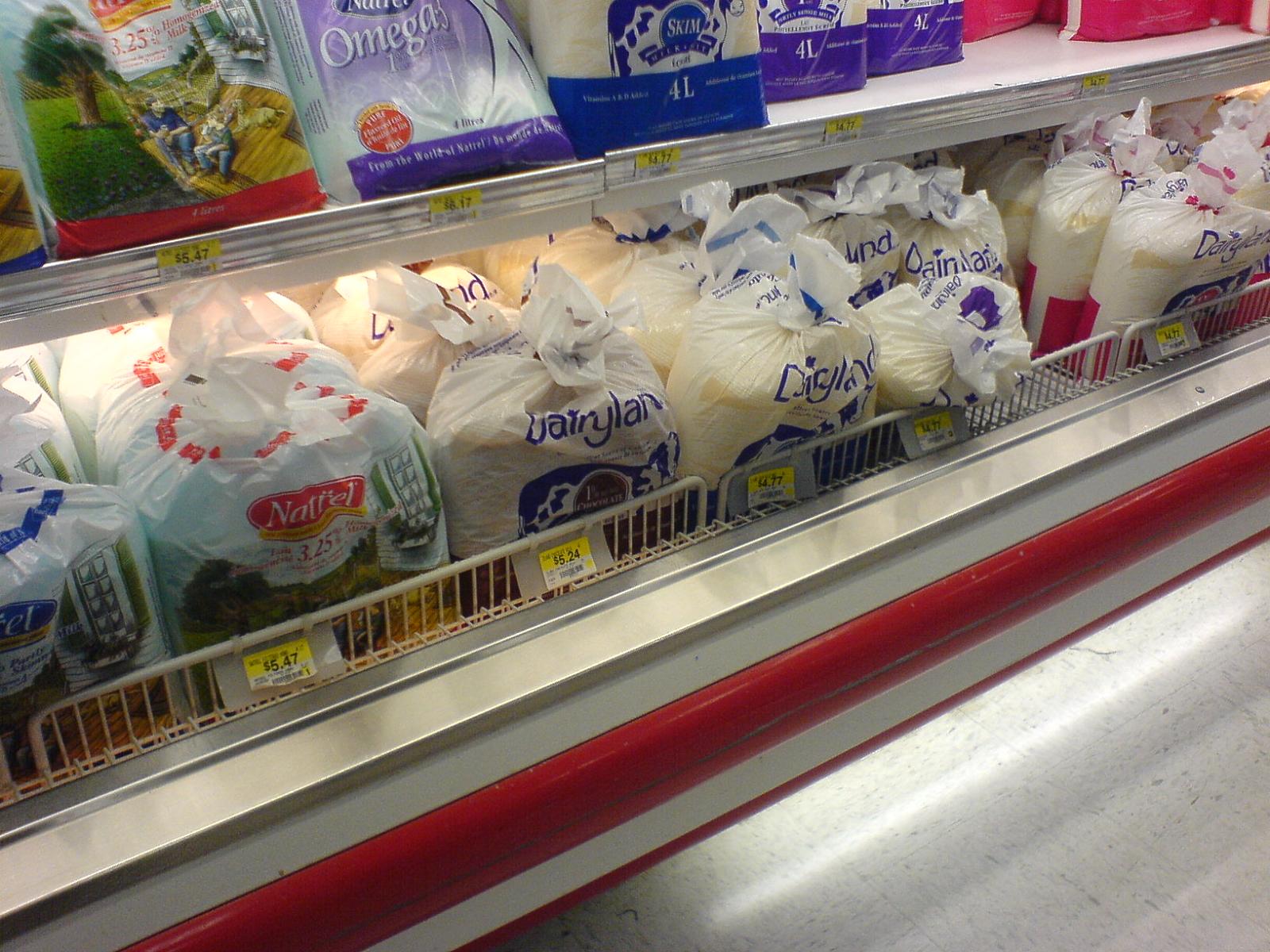
Now, as Canadians, milk bags and their cute rectangular plastic holders were not new to us as they are for many olim from the U.S. and elsewhere.  Coast to coast in Canada, walk into any supermarket and you’ll see a huge display of them:

Image result for canada milk

Photo © Alex Dawson via Wikimedia

So I grew up using milk bags, both loving and hating them.  They’re very handy to keep around, they don’t hog space in your fridge, you can pop them in the freezer if you bought too many.  But on the other hand… when you need to open them, you have to run around looking for a pair of scissors.

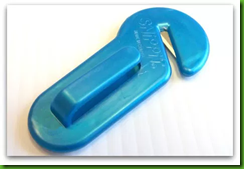
(So much so that in 1979, a Toronto inventor created the “Snippit,” a little device that hangs on the freezer and cuts milk bags open.)

image

(photo credit © Tangibles, the Snippit company)

But no need for a Snippit in Israel!

Here in Israel, there isn’t

Comparing healthcare systems–Israel vs Canada

image

I got a great question from a reader today – I love hearing back from you! – and I thought I’d share it once I was done writing back.  The reader asked, based on my experience with healthcare in Canada and Israel, how I’d compare the two.

It’s actually something I haven’t put a lot of thought into.

As Canadians, socialized health care wasn't such a big transition for us.  American friends have had a variety of reactions, from giddiness that they wouldn’t go bankrupt trying to stay healthy to… well, I don’t think I’ve heard of any who really had a hard time adjusting, so I don’t know what the worst-case scenario is.  I suppose for people coming from the U.S., there may be longer waits and more of a “socialized” feel to things here, if that makes any sense.  But most, as I said, are far too delighted that the safety net exists here to worry about the nitpicky details.

Also, full disclosure:  baruch Hashem (ptoo, ptoo, ptoo!), we haven't had to have a lot of contact with the healthcare system.  However, although we’ve had no major health problems, we have all seen a variety of specialists, done the basic urgent care visit for little-kid stitches, non-emergency hospital visit, and routine health things as well.  Mostly, if it has been harder here, it is because of difficulties with the language, not the system.

A few particulars that I’ve found are different here:

  • Israel is more complicated in terms of choosing a kupat cholim (healthcare plan) and package. 

How you know I’m still Canadian after all these (almost 4) years…

image

How do I know I’m still Canadian, even after almost 4 years in Israel?

Well, for one thing, the big Canadian flag in my front window – genuine, no doubt made in China, purchased last week at Dollarama.  (Full disclosure: I bought the JUMBO size, not SUPER JUMBO, so it’s smaller than the Israeli flag we just took down after Yom Yerushalayim…)

(This is my actual flag pictured above – not some cheesy stock photo.  You can tell it’s my flag because it’s held up with a clothespin – see top-left of photo.)

For another thing, the small Canadian flag in one of the front planters.

For a third thing, we’re flying to Canada at some unspecified point this summer, iy”h.  (Or, as everyone says here, be”h.)

For a fourth thing… well, we just are.  It’s just our culture.

In what way?  Well, here are two examples.

Canadian in the mall

Last summer

Quit apologizing–you’re Israeli now! (Or are you?)

image

If you’re a person who apologizes, you may find yourself in a distinct minority here in Israel.

Now, me, I’m Canadian.  Apologizing is one of the things we do best.

Here’s proof:

Two days before we left Canada, I was in the grocery store getting some last-minute things to bring with us, and I was pushing my cart down the HUGE, wide aisle, and another woman was coming the other way down the HUGE, wide aisle.  I passed her with my cart and she passed me with her cart, and there was lots of room to spare on both sides.  And as we passed each other, I apologized AND she apologized, at exactly the same moment.

Why?

For being close to each other's spaces.  It's hilarious, but it's also true.  We feel very uncomfortable when we are anywhere near other human beings.  In Canada, there's about 1/4 of a square km for every person, while in Israel (I just checked!) - there's 0.0026982436083974 of a square km.

We also don't want to cause anyone a moment's discomfort. 

On our aliyah flight we switched seats in the middle of the night and the flight attendant was confused in the morning, so I apologized - and she said, "You're Israeli now.  Stop apologizing!"

In Israel it's very warm and very close, which is sometimes good and sometimes bad.  Nobody apologizes for anything.

It is a good thing sometimes, to not be too apologetic.  As a nation, Israel sometimes needs to stand up for what it believes in and not let anybody convince us otherwise.  I noticed this bumper sticker on the wall of the bus station in Jerusalem this morning.

image

It says:  “Israel:  Trust in Hashem, and not in America.”  Sometimes, Israel is so busy apologizing to America, or at least, trying to look nice for the Americans, that it loses sight of its own values.

The only problem with trusting in Hashem is that none of us have a direct hotline to Hashem, which means that sometimes Israelis make mistakes and don’t apologize.  Either way, I guess, is a problem – too much apologizing, or not enough.

Does terror in Europe mean the world has gone mad?

image

Does terror in Europe mean the world has gone mad?

Not unless you’re blaming the victims.  And you’re not doing that… or are you?

OK, sorry; probably you are.

Others have said this more eloquently than I, but I can’t sit silently snoozing through what I’m seeing. Here is just one of many memes going around Facebook last week.

image

Source: Twitter

The commentary seems to be of the opinion – and yes, people have actually said this – “The world has gone mad.”

Here’s just a random sampling – these all came up when I searched Google for “Aleppo, Zurich, Berlin,” and I don’t know any of these people personally.

imageimageimageimageimageimageimageimageimageimage

That’s a whole lot of solidarity.  So why does everybody seem to think the world has gone mad?

Because terror has left its nice cozy boundaries.

Where are those boundaries?  Well, you know, the dangerous places, where presumably, it belongs.

I think we all do this to some extent.

Since 9/11 the world has experienced the same thing, to varying degrees, in just about every country I can think of. The Hype cachere incident in France was just one of a number of attacks around the world that stood out. For me and those I know, the 2014 incident in the parliament buildings in Ottawa struck home since the person who did it was a convert to Islam and could have been anybody’s neighbour. Then there was the attack in Nice earlier this year.

(Okay, I have to share the following tasteless meme…)

Should you hang with other English speakers? Yes, and here’s why.

image

Having spent two evenings last week socializing exclusively with English speakers, I’m feeling guilty.  And lazy.

Why?  Well, Thursday night was my monthly English speakers meeting of children’s-book writers and illustrators (SCBWI*), and Friday was our community’s English Speakers Oneg Shabbat. 

At the book meeting, I mentioned the oneg, and one of the Israelis there asked, “Why only English speakers?” 

So then I felt ashamed.  And lazy, like I wasn’t making an effort.  And I almost felt racist (linguist?) for eliminating Hebrew speakers from my social circle so deliberately.  Why move to Israel and then spend so much time hanging out in English??? 

I didn’t even mention that we’re going to the annual Nefesh b’Nefesh Go North English-speaking Shabbaton next week.  Even more English !  Are we just obstinately refusing to integrate into Israeli society?

On the way home from my SCBWI meeting, and for the 2 days since, I’ve put more thought into it.  Because this is something all olim will have to balance in their lives somehow: how much time will you spend “out and about” mingling with the natives and how much time will you spend all huddled and insular with your Anglo “peeps”?

I’ve concluded that it’s not just about laziness.  Though your mileage may vary, here are 5 really good reasons from my own life that I deliberately spend time hanging out with English speakers…

1.  Israelis are busy

Israelis have lives here that are busy and well-established.  Sort of the way we did back in North America.  Many Israelis are too busy to stop and realize that we are here and we need a little extra TLC. 

Should you change your name when you make aliyah?

image

For years, I thought this was a no-brainer.  When in Rome, pick a name like the Romans do… or something.

Apparently, I was dead wrong.  It turns out there are a million reasons not to change your name when you make aliyah:

  • it will confuse and perhaps anger your family and friends
  • people will think you've become more religious (maybe "crazy religious")
  • people will think you're turning your back on your old life
  • you've built a career and reputation in your name
  • you'll have legal problems using the new name
  • you'll never adjust to being called something new

Interesting.  Notice that these are the same reasons many people give to not make aliyah in the first place?

Since you're already taking that giant step – or thinking of taking it – it seems a much smaller leap to give yourself a shiny new handle.  Especially one you've chosen yourself, that you'll love hearing every day and seeing on all your shiny new paperwork.

[By the way, the Hebrew words in the image above are “olah chadashah,” which means “new immigrant to Israel” in the feminine form.]

My grandparents’ “aliyah” to Canada

My grandparents were olim, of a sort.  Well, they were immigrants.  Same thing, right? 

Separately, they found a way out of Poland, where they'd grown up as "Wolf" and "Chana Rivka."  When they came to Canada, they morphed into "William" and "Rose."  They named their kids Albert, Charles and Dorothy.

Home Sweet Home: Sorting us all out

image

Did you have one of these shape sorters as a child?  (Maybe your kids did!)

Look at all those shapes.  Some of them are very similar - the pentagon and the hexagon; the trapezoid and the square; the triangle and the little rounded cone-triangle (is there a name for that shape?). 

(Babies were smarter in those days, I guess - newer shape sorters are much simpler.)

The fascinating part was that no matter how similar the shapes, they wouldn't slide nicely into the wrong hole.

So I think I'm like that, a bit.

We're back in Israel now.  We got home at midnight last night. 

And so now, I can tell you my secret:  I was half expecting to hate it here.  Maybe more than half.  My daughter was in tears as the plane was taking off, leaving behind so many of the people she loves in Canada.  I braced myself, just in case I got here and felt SO depressed to be back.

Brother, can you spare an agora?

image

Know what's nice about being in Canada?

Stepping out of a nationwide cash-coinage crisis, that's what.  In Israel, for whatever reason, you'd swear there was a shortage of coins.  Maybe there is, for all I know.

You know you're not in Israel anymore when you shuffle through your wallet to find the 15¢ (for the overpriced $4.15 iced coffee), and the cashier is mystified, and not particularly grateful that you're giving her your pocket change.

image

(pocket change in Canada)

For whatever reason, that same pocket change in Israel is precious.

Maybe the mentality started back in 1948, when the government recalled all British Mandate small bills and refused to issue new ones.  At the time, stores in the new nation had to resort to issuing "chits" (like a raincheck?) instead of giving change.

Whatever the reason, you must hold onto every single agora (though you won't find anything less than ten agorot in circulation these days; the single-agora coin shown here, my mother’s, is more of a metaphor now). 

Cooking Toronto soup–notes from a vacation in chu”l

image

Here in Toronto, the celery is normal.  The carrots are normal - all year round.  The onions are clean; how awesome is it to peel open an onion without the nasty surprise of mould or flaking dirt tumbling every which way?

I'm cooking in my mother's kitchen, and this isn't the first time this visit.  It's odd, because, growing up, I used her kitchen very rarely. It was HER kitchen, and trespassers - even kids - need not apply.

These days, I'm more bold, I suspect she's more tired, and there is my hungry family to feed.

And even though we've never lived in my mother’s house before this month of vacation, I feel myself slipping into old, familiar patterns. 

For one thing, we are only 2 blocks from where we used to live.  Our old house has been torn down to build a monstrosity, but the view doesn't look too different from my mother's front porch.  Neighbours walk past with their dogs, their kids on bikes.  Police swoop past on bikes or in patrol cars.  No horses sighted yet, but it feels like they could be on their way any time.

We're also back to recycling, the Toronto way.  Recycling, the Israel way, involves rounding up any bottles that don't have deposits and dumping them in the big communal recycle bin across the street. 

Google