Like the MamaLand Empire!

Have you Liked the AliyahLand adventure?
      ...and sign up for weekly aliyah tips by email (it's free).

Showing posts with label sochnut. Show all posts

Do American Jews get a vote in Israel?

If you hate politics, I get it.  Please move along.  Just skip this post.

When I started this site, I feel like I made a promise to you and to myself that I wouldn't get political.  If you want to know more of my thoughts on getting political, in a book that weirdly doesn't get very political, I urge you to read my book, Getting Political: Scenes from a Life in Israel.  (Hey, even if you don't want to know my thoughts, pick up the book anyway!  Seriously, it doesn't get very political...)

And yet.

And yet.

There are times when I feel like I have to get political.

Because when you move to Israel, you cease, in some important way, to be a "diaspora Jew" and become an “Israeli Jew.”

You live here, you walk the daled amos basically every single day of your life, you breathe the holy and sometimes stinky air.

You live with the noise, or block it out with a nonstop stream of English podcasts and audiobooks.

You vote in the elections.

And I don't even have a post I can link to about the elections, because I haven't talked about politics.

But just for a minute, I want to.  So please cut me some slack.
Because I came across this article about how the Canadian diaspora, and presumably, the rest of the diaspora, can influence Israel.

And it scared me.

Spoiler alert: the way that diaspora Jews can influence Israel, apparently, is to participate in the World Zionist Congress coming up in October.  In fairness, it's held in Jerusalem, so they

Know where it’s dangerous?

image

Outside of Israel, that’s where.

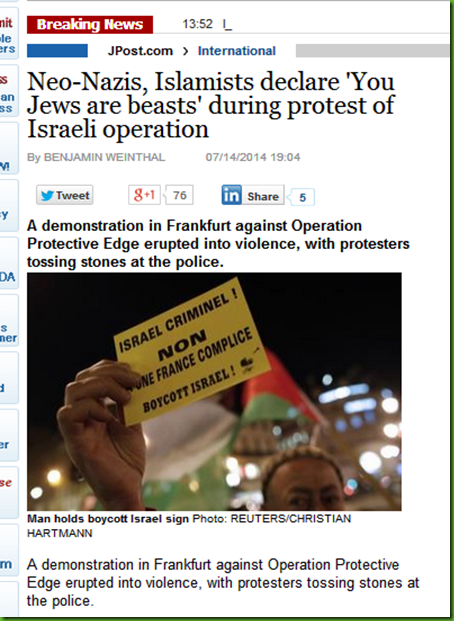
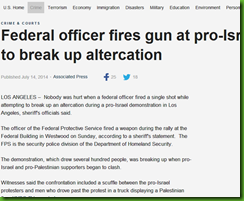
It’s kind of interesting sitting here facing headlines like these.

(click the images to read the stories)

 image image image image

LA, Frankfurt, Paris, Mississauga (Ontario, Canada). 

Most of this makes our life here in the Krayot seem calm in comparison. 

Actually, life here in the Krayot IS calm.  There is no “seem” about it.  No sirens here so far, which sets us apart probably from most Israelis at this point, both north and south.

As opposed to France.

These days, if you mention France to any Jew, anywhere, they shake their heads glumly.  “Oh, France,” they say, like it’s obvious that France would turn into the clearly dangerous place that it is for Jews today. 

The perfect pilot trip to Israel: 10 things you MUST include

image 

Planning aliyah?  Mazel tov!  Or rather, b’shaah tovah, another common expression when something great (like a baby’s birth) is about to happen, but hasn’t yet.

A year ago, we had only the faintest idea of where we wanted to end up.  Today, we’re living here.  And we’re apparently experts on Life in Israel.  Having spoken to lots and lots of olim, I now have a way better idea of how to plan a pilot trip and what to expect while you’re over here.

Please note:  Nefesh b’Nefesh has a great site, where they have comprehensive information about where to go and what to do on a pilot trip, and what serious things you should consider.  These things are important, and they are written by professionals who work in that business full-time.  I am not a professional.  I can only write from my own perspective.

I’m going to leave it up to you to put together your list of Places to Include on the pilot trip.  It’s important, but that’s not what I’m talking about here.  I’m talking about steps that will help you FEEL the country and get to know what it’s like to live here on a daily basis.  If we were coming today, these ten things would be among my top priorities.

1) Supermarket visit – ideally more than one. ** WE DID THIS

We actually spent a lot of time in supermarkets on our pilot trip.  I was fascinated with seeing what brands there were, and all the different types of meat and dairy products.  Another store that’s fun to visit is

Starting out in a Merkaz Klitah: Pros and Cons.

merkaz klitah 1 Now that we’ve been living on our own for a while (two months), many people who meet us are asking the same question:  was it a good idea to start out our lives in Israel living in a Merkaz Klitah?  Was it good for our family?

First, some basic terminology.  A Merkaz Klitah is literally an “absorption centre,” essentially a building run by the Jewish Agency with apartments that are subsidized well below market rates for new olim. 

Who can stay in a MK?

The Jewish Agency has certain criteria that determine whether you stay in a MK:  I think at least one spouse has to be Jewish, and in general, you must be under 50 at the time of your arrival (beat that bullet by less than 3 weeks, as Akiva had his 50th birthday our third week in Israel).  Nobody mentioned that criterion to us, so it may not apply to all of them.

Staying in a MK does NOT depend on your pre-aliyah income, as far as I know, or on how much money you have to spend.  However, different merkazei klitah (the plural) have different rules governing how long you’ll be allowed to spend there, and that may also vary by circumstances.

So the first step, if you want to stay in a Merkaz Klitah, is to get friendly with your aliyah shaliach.  Because they’re run by the Jewish Agency, they have nothing to do with Nefesh b’Nefesh; in fact, we got the impression that NbN was actually slightly trying to discourage us from our plan to go straight into a MK.

(I’m not sure if this is true or not – it was just an impression!)

We mentioned that we wanted an MK and that we had seen the one in Raanana on our pilot trip.  We were very impressed by the multinational makeup of the one we saw in Raanana – but as it turned out, most of the centres in the north are not like that.  Up here, they are mainly Russian, with some other eastern Europeans thrown in for good measure.

merkaz klitah 2 However, the MK we stayed in, in Kiryat Yam, is somewhat uniquely over 90% Ethiopian.

Thinking about this retroactively, I believe it’s important to ask, if you’re looking at staying in any Merkaz Klitah, is “who else is going to be living there?” 

Not out of any reasons of racism, but to make sure you go in with reasonable expectations about the types of bonds you’ll be able to form with your fellow olim living there.

Friendships for life?

Some people have the idea that you will be all buddy-buddy with the other olim in the MK.  I’ve even read this – people forge lifelong friendships in a Merkaz Klitah that they carry with them for the rest of their lives in Israel. 

Based on our experience, I’d say it really depends.  If you happen to find a bunch of likeminded Anglo olim, maybe.  Or if you are a gifted social person who can transcend language barriers, again, maybe.

For us, it was very difficult, though we did make some Spanish-speaking friends from Mexico, which was nice.  But it’s still awkward having them for meals.

I’ll sum up the rest of my thoughts into Pros and Cons, keeping in mind that this is how these things worked out for OUR family.  Your family’s (or your own, if you’re single) experiences could be very, very different.

PROS:

  • Simple arrival:  hop in your free sherut from the airport and your apartment will be set up for you when you arrive.
  • No complicated paperwork:  you don’t need a bank account, cheques, or even a teudat zehut to move in (yay!).  (It took us over two weeks to get teudot zehut, during which time we couldn’t open a bank account or order cheques; renting an apartment would have been difficult, if not impossible.)
  • No buying appliances:  rental apartments here generally don’t come with appliances.  The MK included a fridge, 2-burner stove and a kettle – enough to get us started.
  • Utilities – from Day One.  We had gas, water, electricity and everything, all turned on from Day One.  I cannot tell you how nice that was, having wrangled with those utilities a bit now on our own.
  • Assistance if needed:  we had a “klitah counsellor,” Valentina, who spoke English, Russian and Hebrew, who guided us through opening bank accounts, setting up our kupat cholim (health clinic), and the kids’ school registrations.
  • Short commute to ulpan:  most of the time, the local ulpan is right in the Merkaz Klitah.  If you don’t need ulpan, or want a specialized or advanced non-local ulpan, this would be less of a benefit.
  • Services for kids:  depending on the demographics of your MK, they may provide services like homework help for children.
  • Social life:  besides meeting other olim in the hallways, many MKs offer seasonal social events, like Chanukah parties and celebrations for other chagim.

CONS:

  • The feeling of being “institutionalized.”  You don’t feel independent – because you’re not.  This can be good (someone comes and changes the lightbulbs when they get stuck), or bad (four washing machines for several hundred people).
  • Delaying the inevitable.  Sooner or later, you will have to move out and get an apartment.  Hopefully, your MK stay delays it long enough that you have more Hebrew when that time comes.
  • Not breaking the ice.  There were two categories of other olim in the MK we stayed in:  black and white.  Sorry, but it’s true.  The Ethiopian community were longterm residents – most had been there a few years or more.  They are also a very close-knit community; it was hard to tell where families began and ended (and perhaps irrelevant).  Since they had their whole social life there around them, they really don’t have much to do with the “levanim” (white people) who come through on a short-term basis.  As for the others – apart from some other Canadians, I think the gap, religiously, language-wise, and in other ways, was just too broad for us to even think about crossing.  And since we were all moving on in a fairly short time – I think everybody also figures why bother.
  • Having to move again.  Five or six months is about the longest any MK will let you stay… and that’s just about the same amount of time it takes to get yourself and your kids settled comfortably.  If you hate moving, think a few times about whether you want to incur a second move within your first year here.
  • Bringing your lift?  If you arrange for your lift to come to the MK, you will have to pay to move it all again to your “final” home.  We decided not to – so we stored our possessions for a few months back in Toronto, then had them shipped in time to arrive around when we estimated we’d be moving into an apartment.  For us, this worked out perfectly, but think about whether you prefer to pay twice or do without your STUFF for what can be a very long time.
  • Neighbourhood.  If you choose a Merkaz Klitah, you won’t necessarily have a ton of choice about what kind of neighbourhood you’ll be living in.  We were hoping to live somewhere we could fit in religiously – sadly, there isn’t a big religious community in Kiryat Yam, so we had a bit of a longer walk to shul than usual for a few months.  You may not have much choice even about what city you move to, depending on availability.

Are you thinking about a Merkaz Klitah?  Did you stay in one and have something you’d like to add?  Share your thoughts and experiences to make this post as helpful as possible to others!

Soldiers “R” Us: the warm, fuzzy army

chayelet irena naomi I’ve posted about them before, but okay, I’m STILL fascinated by chayalot – women soldiers, who are really more like girls because they’re just in their late teens and act more like a group of kids on a school trip than the highly-trained group of killers one normally associates with the word “army.”

I remember thinking about this when we were on our pilot trip back in February, and I took this picture of a bunch of them chayalim platformhanging about on a train platform, very much like they were waiting for a teacher to come and read them the schedule for the days’ activities.  Only kind of like Boy Scouts, because they were all wearing uniforms.  And oh, yeah, a lot of them do carry pretty scary-looking weapons.

But other than that, they’re just a bunch of kids… and it seems like one of the big army projects around here is sending kids – girls and boys – to tutor immigrant children and generally help them adapt to life in Israel.  They accomplish this through the medium of Hebrew classes and various lessons in painting and crafts.

Once, when Naomi’s regular teacher (Irena, shown in the big hug above) didn’t show up, I went to the office to find out why and discovered two big army guys, sitting around a table, cutting up used soda bottles.  “We’re making flowers!” they announced.

Surely this is how I would prefer to spend my army service, given the choice.  It’s sort of a messianic vision a la Yeshayahu (Isaiah):  nations will beat their swords into ploughshares, and soldiers will spend their days making pop-bottle flowers?  But perhaps the other army guys make fun of them for getting stuck in what may be regarded as even lower than a desk job.

(That same afternoon, a couple of actual Israeli Scouts (Tzofim) came in to volunteer, just a couple of years younger than the chayalim (far older than any Scouts I’ve seen recently in Canada), and looking not at all ashamed of their slightly goofy-looking Scout uniforms, scarf and all.  Not sure if there is a relationship between scouting and the army, but it seems like good preparation, if they also have to wear uniforms and make pop-bottle flowers with immigrants.)

Today, after a week of preparatory crafts, the chayalim and staff here put together a Chanukah party.  One chayal brought along a recorder and sheet music, the others corralled the children and ensured that the celebratory events went along with, okay, not-quite-military precision.

I assume the soldiers do these things mainly during fairly peaceful periods, and that if need be, they are deployed to somewhere more national security oriented.  I really don’t know at all how the system works, and lack the Hebrew to ask the chayalim and chayalot about it myself. 

How do they pick which ones will “volunteer” to teach the immigrant kids, as opposed to, say, foot patrols in the Golan?  Do they choose soldiers who have been wounded or frightened, or are otherwise unable to perform more rigourous duties?  Or do they rotate through the ranks, so everybody gets a turn?  Do they only pick soldiers who want to work with kids, or does everybody perhaps have to take a turn?

Although all branches of the army are easily identifiable by their distinctive shoulder patches (tag yechida / תג יחידה), which probably carry a lot of useful information for Israelis-in-the-know, I personally have no idea what any of the patches actually mean.  So the red flower logo on Naomi Rivka’s chayelet could mean she is in fact serving with the “Pop-Bottle Flowers” brigade.  I may never know.

But it is a very different thing, growing up with “friends” like these in the army than growing up in Canada, where (for most kids) the army is something distant, cold, and perhaps menacing. 

Kids who grow up in Israeli families probably know lots of friends and relatives who are serving, but for newcomers, adults and kids, the omnipresence of the army and the prospect of serving yourself (or sending your kids to serve, if you’re a parent) can be one of the most daunting and disturbing aspects of life here. 

So whether it’s done explicitly as a PR move or not, this project of sending cute, perky young soldiers to help little kids get used to life in Israel is utterly and completely brilliant.  The message:  Soldiers are young, fun-loving kids, just like you… just regular Israelis, just like you.

Slight change of plans

imageNo, we’re still coming!  Or going (depending on where you are and how you look at it).  But it looks like we may have a slightly different (short-term) destination.

Nefesh b’Nefesh have expanded the “Go North” region to include Haifa and its “krayot” – a bunch of suburbs that are all called “Kiryat” Something (= Something-town). 

And although we were planning to go straight to the Merkaz Klitah (absorption centre) in Karmiel, at the last minute, we were offered a place in the Merkaz Klitah in Kiryat Yam, one of these krayot.  And while the Karmiel MK offered us only a couple of weeks – eek!  during which time we’d have to scramble to find a home – the one in Kiryat Yam has said we could stay longer; from 2 to 5 months.

Actually, to be very honest, these events happened in the reverse order:  we were offered the place in Kiryat Yam, we considered it (and checked with Nefesh b’Nefesh to be sure!) and ultimately said no because it wasn’t in the Go North region.   Then I got an email saying they had expanded the Go North region, so I emailed the Jewish Agency back saying, “yes, please!” to Kiryat Yam.

Downsides:

  1. It’s not Karmiel, and it’s not a town we would probably consider living in.
  2. No religious schools nearby – the kids will have to travel daily to Kiryat Shmuel, another of the krayot, about 20-30 minutes’ walk away.
  3. Not our ultimate destination – this will probably mean transferring schools mid-year.

Upsides:

  1. Ulpan onsite – however, they only offer level alef (the first level), so I may have to travel to another ulpan, unless I am also at the alef level, which may indeed be the case.  I’m not saying my Hebrew is so great, just that it’s better than Ted’s, so if he’s alef… well, maybe I’m alef-and-a-half.
  2. Other resources onsite  - and hopefully, assistance with some of the mundanities of day-to-day life
  3. Reduced rent – the downside of this is losing part of the first-year rent subsidy that is part of your sal haklitah (immigrant benefits)
  4. Meeting other immigrants – the downside of this is that, from what I understand, most of the olim here are from Ethiopia, which isn’t a downside in and of itself, simply that they will have had a very different experience from ours.
  5. The train!  Is nearby!  I love this one.  Easy to get to Yerushalayim and other parts of the country, easy for Elisheva and others to find us.
  6. The city!  Is nearby!  I love this, too.  I am a city girl, through and through, and I’ve been sad about leaving big city life behind.  Haifa isn’t Toronto, and Kiryat Yam isn’t Haifa, but it’s a whole lot more exiting than most of the small towns in Northern Israel.  Not saying I don’t still want to end up there, but there it is... while we’re getting our sea legs, it may be reassuring.
  7. Employment -  shamefully, I forgot to mention this when I first posted last night.  Parnassah (earning a living) is important.  No matter where we end up living in the north, Haifa is a centre of employment and it will be handy to be there for a number of reasons.

File:Downtown Haifa, Israel at night.jpg

(downtown Haifa at night)

Here’s a view of the Merkaz Klitah from a distance:

image

It’s right on the Mediterranean, which sounds pretty deluxe to my Canadian ears, but I’ve heard that Kiryat Yam is the most run-down of the krayot.  Also, nothing about life in a merkaz klitah is “deluxe” anything. 

And finally, “situated right on the Mediterranean” means that the air will contain a shockingly high percentage of that healthful Mediterranean water – exactly the kind of humidity I had hoped to avoid.  (Right now, the temperatures are in the high 20s, with a humidity around 60-some-odd percent.)

Still – we think and hope and pray that it will be a good thing.

The view next door (beyond the palm trees is the Mediterranean):

image

Meanwhile, looking up the Merkaz Klitah in Google StreetView, I happened to notice a little drama playing out in front of the main gate…

These people are getting out of some sort of car with a shopping cart full of suitcases – all their earthly possessions, or at least, whatever didn’t fit into their lift.

Cruising slowly past on the Google camera-car…

imageimage

imageimage

image

I don’t know who these people are, and this little drama played itself out, according to Google, in October 2011.  I hope by now he/she/they have found a happy “forever home” in the holy land.

Im yirtzeh Hashem by us!

Yay, yay, yay!!!

image

Naturally, we will not be getting the visas before our pilot trip, because once the aliyah visa is in there, it’s our last trip as “chutz la’artziyim.”

Which is good, because there is altogether too much stuff to organize before the trip anyway.

Ooooh… what a great feeling!

Our Aliyah Essay

Done!!!  After several months of fits and starts, we’re (meaning I’m) finished filling out the online NbN / Sochnut application form – at last!  Paying the $100 application fee felt like the “putting money where mouth is” milestone, but the biggest hurdle tonight was this 4000-character essay outlining why we want to make aliyah, and our detailed “post-aliyah plan.”

Oh, another milestone of this application form:  they asked for given names as they appear on all our Canadian legal documentation… but they also asked what name we prefer to use.  I filled in Hebrew names – Ted’s current name and my yet-to-be-revealed “aliyah” name.

Here’s our best attempt – written by me in close consultation with Ted.  Really, truly… I promise, he was sitting behind me and we were talking about it while I typed:

INTRODUCTION

We may not be a typical “aliyah family,” but in middle age, we are creative, adaptable and flexible – and also, perhaps more than younger couples, better-equipped to deal with unusual situations and take them in stride. This year, we’re moving into a new stage in our lives with the graduation of our older children, and we’re ready to explore new worlds and push the envelope far beyond our day-to-day lives here in Canada.

REASONS FOR ALIYAH

My husband says, “when I was in Israel, I felt it was like a haven for the kind of life that I was trying to achieve.” Having just come out of the holiday of Rosh Hashanah, I [Jennifer] couldn’t help but notice how many times the machzor refers to “Israel” and “Zion” – not theoretical or metaphorical references, but concrete: it’s referring to an actual place, a place where we can live as Jews today fairly easily.

When I became religious years ago after growing up with a largely “spectator” type of religious approach, I wanted to make my Judaism real in every way possible. Aliyah was part of that plan, but more than 20 years later, I’m not there yet. God willing, this will be the year we make it happen.

DETAILED POST-ALIYAH PLAN

At this early stage, to be honest, I have no idea where we’ll be staying immediately on arrival in Israel – hopefully somewhere in the North, according to our current plan. We are currently discussing our options, but it’s likely that one of us will go ahead or stay behind with the two younger children while the other takes care of technicalities of the move (packing, cleaning up the house here, etc).

This period, one of physical transition, will probably take the most creativity on both our parts, along with a willingness to be “up in the air” for a while as we settle details of housing, utilities, medical care, appliances, lift, paperwork, Internet/phone, bank accounts, etc.. This is probably when we’ll need the most support on the ground as well, and advice is always appreciated.

After our physical needs are taken care of (housing and food), our priority will be finding Ulpan / Hebrew opportunities for every family member. I believe the younger children (they will be 8 and 5) are too young for official Children’s Ulpan, but ideally there will be some type of Hebrew program immediately. If not, we will likely find a summer camp for them and hope they’ll pick up lots of Hebrew in a fun, social setting. We’ll also need to use our time during the summer to finalize arrangements for school and research possible chugim [activities] available nearby.

Ideally, we will be “settled” in our community, wherever we find ourselves, in time for the Tishrei chagim [fall holidays]. It would be fantastic to have friends or at least close acquaintances within the community and a synagogue where we are excited to be spending the chagim [holidays] themselves.

We are planning to have our older daughter (not making aliyah) in Israel for the year attending a seminary program, so God willing, she will be able to be at home with us for the chagim. I would like to make this transition as smooth as possible for her. That’s true for our other children, of course, but I believe younger children are probably more flexible, so I plan to work overtime to make sure the older kids feel loved and welcome in our new home.

We know we’re in for a tough couple of years, but easing the transition for all our children is and will remain our top priority – letting them know we are both having an adventure and fulfilling a dream – not just OUR dream, but God’s dream for the Jewish people.

CONCLUSION

It will be difficult to leave beloved family members behind in Canada. It will be difficult to navigate the many hurdles ahead, barriers of language and distance and money and culture, but we’re confident that we are ready to take on this amazing adventure and emerge as better, more fulfilled Jews and as a stronger, happier family.

Google